When a commercial flat roof needs replacement, the decision usually narrows to three systems: TPO, EPDM, or modified bitumen. Each has been used on thousands of commercial buildings across the country, and each has legitimate strengths and limitations that make it better suited for certain applications than others.
The problem is that most comparisons you’ll find online are written by companies that only install one system, so the “comparison” inevitably favors their product. This guide is written from the perspective of a contractor that installs all three and recommends based on building conditions, not inventory.
If you’re a property manager, building owner, or facilities director evaluating a roof replacement, this is the information you need to have an informed conversation with your roofing contractor, and to understand why they’re recommending what they’re recommending.
Understanding the Three Systems
Before comparing performance, it helps to understand what each system actually is and how it works.
TPO (Thermoplastic Polyolefin)
TPO is a single-ply thermoplastic membrane that comes in large rolls and is installed over insulation on flat or low-slope commercial roofs. Its defining characteristic is heat-welded seams, the overlapping edges are fused together using hot air, creating a continuous waterproof bond that’s actually stronger than the membrane itself.
TPO is almost always white, which gives it strong solar reflectivity. This means it reflects sunlight rather than absorbing it, keeping the roof surface and the building below cooler. TPO currently commands roughly 40% of the commercial roofing market and has been the dominant system for new construction over the past decade.
EPDM (Ethylene Propylene Diene Monomer)
EPDM is a single-ply synthetic rubber membrane that has been used in commercial roofing for over 50 years. It’s the oldest of the three systems discussed here, and it has the longest field-proven track record.
Standard EPDM is black, though white versions are available at higher cost. Seams are joined using adhesive or specialized seam tape rather than heat welding. EPDM is known for exceptional flexibility, it handles temperature swings, building movement, and freeze-thaw cycles without cracking or becoming brittle.
Modified Bitumen
Modified bitumen is a multi-layer asphalt-based system that evolved from traditional built-up roofing (BUR). It consists of a base sheet and one or more reinforced cap sheets, with the asphalt modified by either APP (atactic polypropylene) or SBS (styrene-butadiene-styrene) polymers to improve flexibility and durability.
Modified bitumen can be installed by torch application (heating the underside), hot mopping with asphalt, cold adhesive, or self-adhering sheets. Its multi-layer construction makes it the thickest and most puncture-resistant of the three systems.
Head-to-Head Comparison
Installed Cost
EPDM is typically the least expensive of the three systems on a per-square-foot basis. Modified bitumen falls in a similar range, though the multi-layer application process can push labor costs higher on complex roofs. TPO generally carries the highest installed cost, with the price increasing for thicker membranes (60 or 80 mil) and more complex installations.
Actual project costs depend on building size, roof condition, access complexity, insulation requirements, and whether the existing roof needs full tear-off. A site-specific assessment is the only reliable way to compare real numbers across systems.
Expected Lifespan
EPDM has the longest proven track record, with many installations reaching 25-30 years before requiring replacement. The system’s aging characteristics are well understood and predictable.
TPO roofs typically last 20-30 years. Earlier TPO formulations (pre-2010) experienced some premature failures that gave the product a mixed reputation, but current-generation TPO membranes from major manufacturers have largely resolved those issues. Membrane thickness matters, 60-mil and 80-mil membranes outperform 45-mil installations.
Modified bitumen has the shortest expected lifespan of the three, typically 15-20 years. The asphalt-based composition is more susceptible to UV degradation over time, and the system generally requires more frequent maintenance to achieve full lifespan.
Energy Efficiency
TPO is the clear winner on energy performance. Its white reflective surface meets Energy Star cool roof requirements and can reduce rooftop temperatures by 50-60°F compared to a dark surface on a hot day. For buildings with significant cooling loads, warehouses, offices, retail, this translates directly to lower utility costs.
White EPDM is available and offers improved reflectivity over standard black EPDM, but it costs more and doesn’t match TPO’s reflective performance. Standard black EPDM absorbs heat, which increases cooling costs in summer but can modestly reduce heating costs in winter by retaining thermal energy.
Modified bitumen with reflective cap sheets or coatings provides moderate energy performance, but it doesn’t approach TPO’s solar reflectivity in standard configurations.
Seam Integrity
TPO’s heat-welded seams are its greatest structural advantage. When properly installed, the welded seam creates a bond stronger than the membrane itself. This makes TPO’s seam performance excellent, but it also means installation quality matters enormously. Improper welding technique can compromise the entire system.
EPDM’s adhesive and tape seams are its greatest vulnerability. Over time, UV exposure and temperature cycling can degrade adhesives, and seam failures are the most common source of leaks on EPDM roofs. Proper installation and regular seam inspection mitigate this, but it remains a legitimate concern.
Modified bitumen’s multi-layer construction provides inherent redundancy. Even if the top layer is compromised, the base sheet beneath provides an additional line of defense against water intrusion. This layered approach makes modified bitumen particularly forgiving on buildings where the roof takes abuse.
Puncture and Traffic Resistance
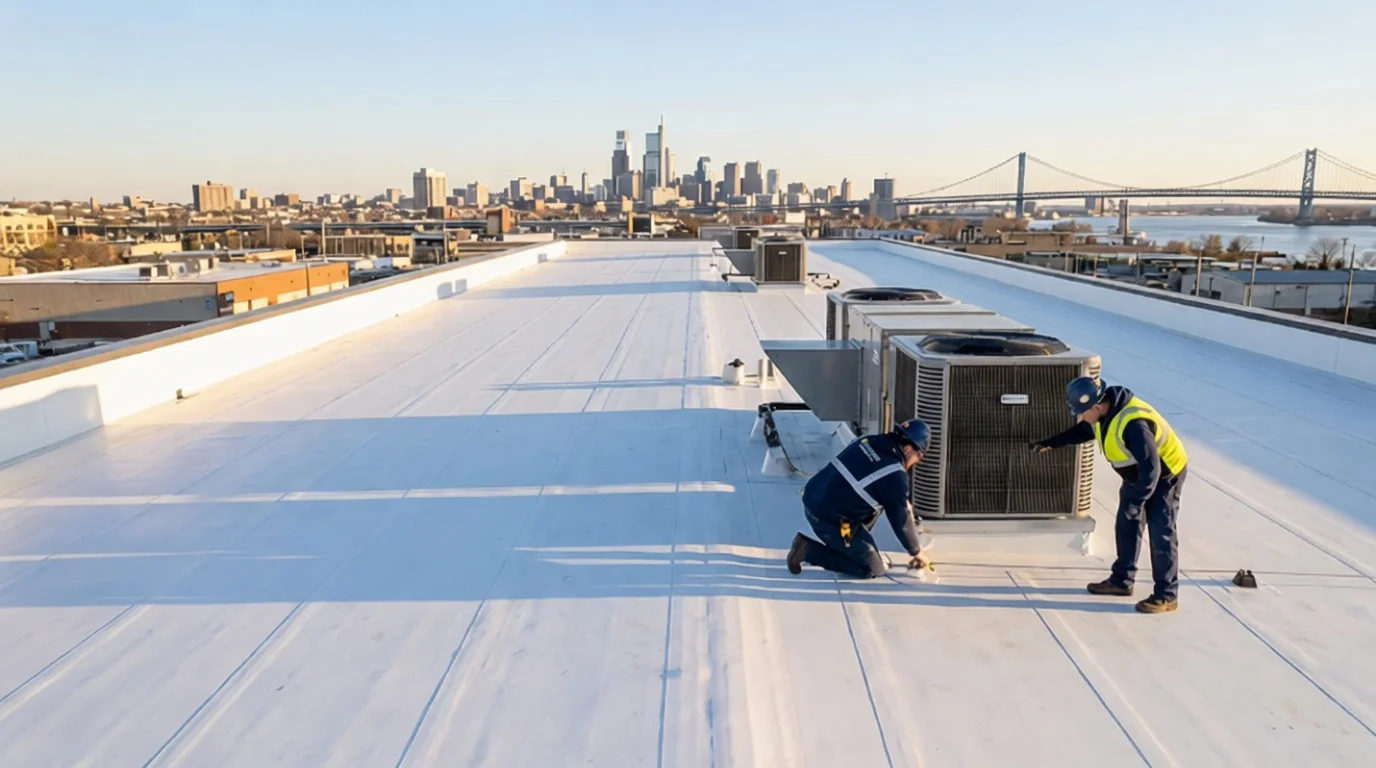
Modified bitumen is the strongest performer here. Its multi-layer construction and thick asphalt composition absorb impact and resist punctures from foot traffic, dropped tools, and rooftop equipment work. For buildings that require regular roof access, HVAC maintenance, equipment servicing, inventory operations, modified bitumen handles the abuse.
EPDM’s rubber composition provides good flexibility and absorbs impact without cracking, but the membrane is thinner than modified bitumen and more susceptible to puncture from sharp objects.
TPO is the most vulnerable to puncture, particularly the thinner 45-mil membranes. Buildings with heavy rooftop traffic should use thicker TPO (60 or 80 mil) or incorporate walk pads in high-traffic areas.
Maintenance Requirements
All three systems require regular inspection and maintenance to achieve full lifespan. Twice-yearly inspections (spring and fall) plus post-storm checks are standard practice for any commercial flat roof.
EPDM requires the most proactive seam monitoring. Seam adhesive can degrade over time, and catching early separation before it becomes a leak is critical. Repairs are straightforward, patching and re-seaming with adhesive is relatively simple.
TPO maintenance focuses on monitoring seams and keeping the membrane free of debris that could cause ponding. Repairs require heat-welding equipment and trained technicians.
Modified bitumen maintenance includes monitoring for UV degradation, checking cap sheet granule loss, and maintaining any applied coatings. The multi-layer system can mask issues developing beneath the surface, so thorough inspections matter.
Solar Compatibility
If rooftop solar is part of your building’s long-term plan, or even a possibility, the roofing system you choose today directly affects your options and costs later.
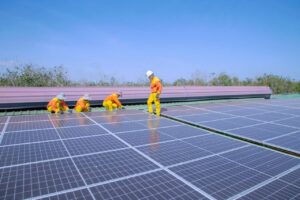
TPO is the most solar-friendly commercial roofing membrane. Its white surface reduces ambient roof temperature (which improves solar panel efficiency), it’s compatible with both ballasted and mechanically attached racking systems, and its heat-welded seams handle the additional penetrations and attachments that solar mounting requires.
EPDM is compatible with solar installations but requires more careful attachment planning. Ballasted systems work well on EPDM; mechanically attached systems require additional flashing and membrane reinforcement at penetration points.
Modified bitumen can support solar installations, but the torch-applied or hot-mopped nature of the system makes rework and attachment more complex. If solar is likely, TPO or EPDM is the better foundation.
Critically, if your existing roof will need replacement within 5-10 years and you’re considering solar, coordinate both projects. Installing solar on a roof that needs near-term replacement means removing all panels, replacing the roof, and reinstalling the solar system, a costly and unnecessary sequence. Sundra handles both commercial roofing and solar, which means we can assess both systems and plan a coordinated scope.
Which System Fits Your Building
There’s no universal “best” system. The right choice depends on your building’s specific conditions, your operational requirements, and your long-term plans.
TPO is typically the right choice when energy efficiency is a priority, the building has significant cooling loads, solar installation is planned or possible, the roof will see limited foot traffic, and you want the strongest seam performance.
EPDM is typically the right choice when the building is in a climate with extreme temperature swings, cost efficiency is a primary concern, the roof has a simple layout with minimal penetrations, and you value a long-proven system with predictable aging.
Modified bitumen is typically the right choice when the roof receives heavy or frequent foot traffic, rooftop equipment requires regular service access, puncture resistance is a priority, and you need the redundancy of a multi-layer system.
In practice, the recommendation often comes down to a site assessment. Roof geometry, existing insulation, drainage conditions, structural capacity, operational patterns, and future plans all factor into the decision. Any contractor who recommends a system before evaluating the building is selling a product, not solving a problem.
Not Sure Which System Your Building Needs?
The best way to determine the right roofing system is a professional assessment of your specific building. We evaluate the existing roof condition, structural requirements, drainage, operational patterns, and long-term plans, then recommend the system that fits, not the one we happen to have in stock.
Whether your commercial roof needs replacement now or you’re planning ahead, a clear assessment gives you the information to make a confident decision.
Commercial Roofing System FAQs
There is no single best system, the right choice depends on your building’s specific requirements. TPO offers the best energy efficiency and solar compatibility. EPDM provides the longest proven track record and best cold-weather performance. Modified bitumen delivers superior puncture resistance for high-traffic roofs. A proper assessment evaluates your building and recommends accordingly.
TPO roofs typically last 20-30 years, EPDM roofs last 25-30 years, and modified bitumen roofs last 15-20 years. Actual lifespan depends heavily on installation quality, maintenance frequency, and climate exposure. Proper installation is the single biggest factor in longevity.
Yes. TPO and EPDM are both compatible with ballasted and mechanically attached solar racking systems. TPO’s white reflective surface complements solar installations by reducing ambient roof temperature. If your roof will need replacement within 5-10 years, coordinating the roof and solar installation avoids costly panel removal and reinstallation later.
There is no single best system, the right choice depends on your building’s specific requirements. TPO offers the best energy efficiency and solar compatibility. EPDM provides the longest proven track record and best cold-weather performance. Modified bitumen delivers superior puncture resistance for high-traffic roofs. A proper assessment evaluates your building and recommends accordingly.
TPO is a white thermoplastic membrane with heat-welded seams, offering strong energy efficiency through solar reflectivity. EPDM is a black synthetic rubber membrane with adhesive or tape seams, offering proven durability and flexibility in extreme temperatures. TPO is newer with stronger energy performance; EPDM has a longer field history with more predictable aging.
Commercial flat roofs should be inspected at least twice per year, ideally in spring and fall, plus after any significant storm event. Regular inspections catch small issues like ponding water, seam separation, or membrane punctures before they become expensive problems.