Storm damage to a roof often goes undetected because the most consequential damage is rarely visible from the ground. Wind breaks shingle seal strips without displacing the shingle. Hail fractures the granule layer in ways that accelerate aging over months. And falling debris can puncture membranes or crack flashing in areas homeowners never see. The homeowners who act within the first 48 hours after a storm consistently have more options, cleaner insurance outcomes, and lower total repair costs.
Sundra is a full-service exterior company serving PA, NJ, and DE that inspects and repairs storm-damaged roofs across both residential and commercial properties. This guide is based on what we see during post-storm inspections in our service area and walks through exactly what to do, what different types of damage look like, and how to decide what comes next.
What Does Storm Damage Look Like on a Roof?
Storm damage to a roof takes three primary forms: wind damage that lifts shingles and breaks seal strips, hail damage that displaces the protective granule layer on shingles, and impact damage from falling branches or debris. Wind and hail damage are often invisible from the ground and require a professional roof inspection to identify.
Wind Damage
Wind does not have to tear a shingle off to cause a real problem. What we see far more often during inspections is wind lifting shingle tabs just enough to break their seal strip. The shingle drops back into position, looks perfectly normal from the ground, and then allows water underneath during the next rain. Over time, this leads to deck rot, insulation damage, and interior leaks that appear to come out of nowhere.
On flat and low-slope roofs, which are common on row homes and commercial buildings throughout PA and NJ, wind lifts membrane edges and separates seams. This happens most frequently along parapet walls and roof perimeters where wind loads concentrate.
One pattern worth knowing: wind damage is typically inconsistent across a roof. The windward side may have significant damage while the leeward side looks untouched. A ground-level visual check only reveals part of the picture, which is why we recommend a full professional inspection after any significant wind event.
Hail Damage
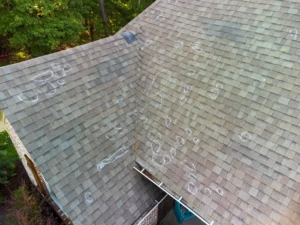
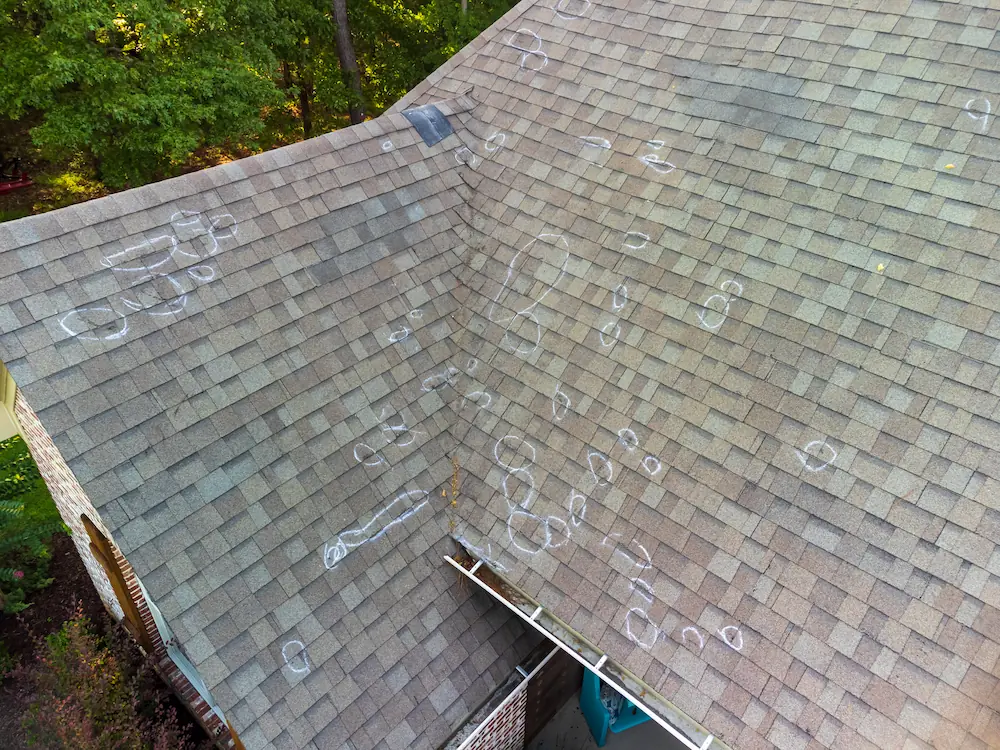
Hail damage is the most commonly underestimated form of storm damage to roofs. A hailstone large enough to damage roofing material does not always leave a visible mark from 30 feet below. What it does is displace the protective granule layer on asphalt shingles, creating exposed spots that degrade rapidly under UV exposure. A roof that appeared to have 10 years of useful life can be functionally compromised after a single hail event.
During our inspections, we document hail impacts per square foot because insurance adjusters use impact density as a primary factor in determining whether repair or replacement is the appropriate scope. This type of documentation consistently makes a measurable difference in claim outcomes for homeowners we work with.
Falling Debris and Impact Damage
Branches, limbs, and airborne debris cause the most visually obvious storm damage. Punctured membranes, cracked ridge caps, crushed vent boots, and bent flashing are common results. Impact damage is generally the easiest type to identify and the most straightforward to repair, provided it is addressed before water enters the roof system.
What Is Not Considered Storm Damage?
Pre-existing wear, deferred maintenance, aging materials, and poor prior installation are not storm damage, even if they become more apparent after a storm. A roof that was already leaking before a storm event will not typically be covered under a storm damage insurance claim. This distinction matters because it directly affects insurance eligibility. During our inspections, we are upfront about what is and is not storm-related because accurate documentation protects homeowners from claim denials and sets realistic expectations from the start.
What Should You Do Immediately After Storm Damage to Your Roof?
After a storm, homeowners should take three immediate steps: document all visible damage with timestamped photos and video before making any changes, contain any active water leaks inside the home, and schedule a professional roof inspection within the first 48 hours. Acting quickly preserves insurance claim options and prevents secondary damage from undetected issues.
Step 1: Document Everything Before You Touch Anything
Before making any temporary repairs, moving debris, or cleaning up the yard, document the condition of your roof and property. Take photos and video from the ground: wide shots of the full roofline from all four sides, close-ups of anything that looks damaged or displaced, images of debris in the yard, and any interior signs of water intrusion such as ceiling stains, dripping, or damp insulation.
Use your phone’s timestamp feature. Insurance carriers review when documentation was created relative to the storm event. This is one of the simplest steps you can take, and in our experience working with homeowners through the claims process, it consistently improves outcomes.
Step 2: Contain Any Active Water Leaks
If water is actively entering your home, containment is the priority. Inside the home, place buckets directly under drip points, move furniture and electronics away from the affected area, and lay towels along baseboards to prevent floor damage. If you can safely access the attic, placing a bucket at the leak source is more effective than waiting for water to migrate through ceiling drywall.
For exterior protection, tarping exposed areas is the standard interim measure. If you are not comfortable working on a roof, or if weather conditions are still hazardous, this is the type of situation where professional help is warranted immediately. Sundra provides emergency roof repair services for active leak situations after storms across PA, NJ, and DE.
Step 3: Schedule a Professional Roof Inspection
Our recommendation: schedule a professional roof inspection regardless of whether you see visible damage from the ground. The cost of an inspection is negligible compared to discovering undetected damage months later after it has compounded into a larger, more expensive problem.
We inspect roofs after storms across PA, NJ, and DE, and a significant percentage of the damage we document during these inspections was not visible from street level. Scheduling early also means you get ahead of the backlog that forms when every homeowner in the area calls at the same time after a major weather event.
Schedule Your Post-Storm Roof InspectionHow Does Insurance Work for Storm Damage Roof Repair?
Most homeowners insurance policies cover sudden, storm-related roof damage. The standard process involves filing a claim, having an adjuster inspect the damage, receiving a scope of work and cost estimate from the adjuster, and then selecting a contractor to complete repairs. Professional inspection documentation from your roofing company strengthens the claim and supports supplemental filings if hidden damage is found.
Here is what we tell every homeowner we work with, based on our direct experience coordinating storm damage repairs with insurance carriers:
Your adjuster’s initial estimate is a starting point, not a ceiling. If additional damage is discovered during the repair process that the adjuster did not identify, supplemental claims can and should be filed. This is standard practice. We provide the documentation needed to support supplemental claims whenever the actual scope expands beyond what was initially visible.
Professional documentation changes claim outcomes. The inspection report, photos, and written scope of work that your roofing company provides are the foundation of a strong claim. When Sundra inspects a roof after a storm, we create documentation specifically formatted for the insurance process because we understand how adjusters evaluate damage, what they look for, and what level of detail supports approval.
File your claim promptly. Most policies require claims to be filed within a specific window after the damage event, and earlier filings are easier to substantiate because damage conditions have not changed. Check your specific policy or call your insurance agent to confirm your deadline.
At Sundra, we assess the damage, provide clear documentation, explain your options, and let you make the decision on your own timeline.
Should You Repair or Replace Your Roof After Storm Damage?
Whether to repair or replace a storm-damaged roof depends on three factors: the extent of damage across the roof plane, the age and remaining useful life of the existing roof, and what the insurance scope covers. Localized damage to shingles, flashing, or membranes can typically be repaired. Widespread damage on an aging roof usually makes replacement more practical and cost-effective.
When Emergency Repair Is the Right Call
Emergency roof repair is warranted when water is actively entering the home through multiple points, when structural elements are exposed or compromised, or when the damage creates a safety hazard. Emergency work is triage: tarping exposed areas, sealing active leak points, and stabilizing structural concerns. It is not a permanent fix, but it stops active damage while a permanent repair plan is developed.
If you have an active roof leak right now, contact Sundra for emergency roof repair.
When Scheduled Repair Makes Sense
Most storm damage falls into the scheduled repair category. Lifted shingles, damaged flashing, cracked vent boots, and localized membrane failures can be assessed, documented, and repaired on a normal project timeline without the damage worsening in the interim. If there is no active water intrusion and the damage is contained to specific areas, scheduled repair is the appropriate path. This timeline also gives you the opportunity to file your insurance claim and coordinate the process properly before work begins.
When Replacement Becomes the Better Option
If storm damage is widespread across the roof plane, if the roof was already approaching end of life before the storm, or if the insurance carrier’s scope of work covers a substantial portion of the roof area, replacement is often the more practical and cost-effective path forward. In some cases, the insurance payout for extensive storm damage covers most or all of a replacement that was going to be needed within the next few years regardless.
We have a detailed guide on how to evaluate whether repair or replacement is the better option for your roof that covers the full decision framework.
Why Is Post-Storm Roof Work Different from Routine Roof Maintenance?
Post-storm roof repair involves insurance coordination, adjuster-ready documentation, supplemental claim filing, and an understanding of how carriers evaluate damage scope. These requirements go beyond standard roof maintenance and repair. Choosing a roofing company with specific storm damage experience affects both the quality of the repair and the financial outcome of the insurance claim.
This is something homeowners do not always realize, and it directly affects who you should trust with the work.
A company that does excellent routine roof maintenance may not have experience navigating the insurance documentation process, creating inspection reports that meet adjuster standards, or filing supplemental claims when hidden damage is discovered mid-repair. These are not minor details. They are the difference between a fully covered claim and an out-of-pocket expense the homeowner did not expect.
At Sundra, we built our post-storm process around this reality. Every storm damage project follows the same end-to-end workflow: professional inspection with detailed photo documentation, written scope of work formatted for insurance submission, coordination support through the claims process, and repair or replacement execution. That process exists because we have seen what happens when any one of those steps is handled poorly or skipped entirely.
How Can You Prepare for Storm Season in PA and NJ?
Homeowners in PA and NJ can prepare for storm season by scheduling a pre-season roof inspection to identify vulnerabilities, reviewing their insurance policy’s storm damage coverage and filing deadlines, maintaining gutters and trimming overhanging branches, and photographing their roof’s current condition to establish a documented baseline for future claims.
The mid-Atlantic storm season intensifies from late spring through summer, with heavy thunderstorms, hail events, and high-wind systems most frequent from April through September. These steps reduce your exposure and improve your response time if damage occurs:
Get your roof inspected before storm season starts. A pre-season inspection identifies loose flashing, worn sealant, aging shingles, and drainage issues that storms will exploit. Addressing a minor flashing issue in April is significantly less expensive than repairing the water damage it causes after a June thunderstorm.
Know your insurance policy before you need it. Review your deductible, your storm damage coverage scope, and your claim filing deadline now. Having this information ready eliminates delays when you are dealing with active damage and need to act quickly.
Maintain your property. Trim overhanging branches that could become projectiles in high wind, keep gutters clear and functioning, and verify that downspouts direct water away from the foundation. These basic maintenance tasks meaningfully reduce the severity of storm damage when it occurs.
Document your roof’s current condition. A set of photos taken during clear weather establishes a visual baseline that makes it dramatically easier to demonstrate what changed after a storm event. This is one of the most effective and most frequently overlooked preparation steps homeowners can take.
Schedule Your Pre-Season Roof ConsultationSchedule Your Roof Inspection with Sundra
Whether you are responding to storm damage that has already occurred or preparing your roof for the season ahead, the right first step is a professional inspection that gives you a clear, documented picture of your roof’s current condition.
Sundra provides thorough post-storm and pre-season roof inspections for homeowners across PA, NJ, and DE. We document everything we find, explain it in plain language, and give you a direct recommendation on what needs attention and what does not. Our inspection reports are formatted to support insurance claims if storm damage is confirmed. No pressure, no scare tactics, and no ambiguity about what we found and what we recommend.
Schedule Your Roof ConsultationStorm Damage FAQs
How do I know if my roof has storm damage?
The most reliable way to confirm storm damage is a professional roof inspection. From the ground, visible indicators include missing or displaced shingles, debris on the roof surface, bent or detached gutters, and new water stains on interior ceilings. However, hail impacts, broken seal strips, and membrane separations are typically not visible from the ground. Sundra recommends scheduling an inspection after any significant storm in PA, NJ, or DE regardless of what is visible from street level.
Should I call my insurance company or a roofer first after a storm?
In most cases, scheduling a professional roof inspection first is the better approach. An inspection gives you documented evidence and a clear understanding of the damage before you engage your insurance carrier. If damage is severe and water is actively entering your home, contact both immediately. Sundra provides inspection documentation specifically formatted to support the insurance claims process.
How long do I have to file a roof damage insurance claim after a storm?
Most homeowners insurance policies require storm damage claims to be filed within one to two years of the event. However, filing sooner produces better outcomes because roof conditions change over time and delayed claims are harder to substantiate with evidence. Contact your insurance agent to confirm your specific policy deadline.
Can storm damage to a roof be repaired, or does the whole roof need to be replaced?
It depends on the extent of damage and the roof’s current age. Localized damage such as missing shingles, compromised flashing, or isolated membrane punctures can typically be repaired effectively without full replacement. Widespread damage across the roof plane, especially on a roof that was already aging, usually makes replacement the more practical and cost-effective option. Sundra determines this during inspection and explains the reasoning behind our recommendation.
What is emergency roof repair?
Emergency roof repair is immediate, temporary work performed to stop active water intrusion and prevent further interior damage. It typically includes tarping exposed roof areas, sealing active leak points, and stabilizing any compromised structural elements. Emergency repair is triage, not a permanent solution, and is followed by a full assessment and permanent repair plan. For active leaks, contact Sundra at 855-278-6372.
How much does it cost to repair storm damage on a roof?
Storm damage repair costs vary based on damage type, extent, roof material, and accessibility. Sundra provides detailed, transparent pricing based on findings from the inspection rather than general estimates. When insurance is involved, our documentation is formatted to support the claims process and minimize out-of-pocket costs for homeowners.
Does Sundra help with the roof insurance claim process?
Yes. Sundra creates detailed inspection reports with photographs and written scopes of work formatted specifically for insurance adjusters. We also provide documentation to support supplemental claims if additional damage is discovered during repairs. We do not act as public adjusters, but our reporting is designed to give your claim the strongest possible foundation.
What should I do if I see water stains on my ceiling after a storm?
Water stains on a ceiling after a storm indicate that water has entered the roof system and migrated to the interior. Place a bucket under any active drip points, move furniture and electronics away from the area, and schedule a roof inspection as soon as possible. Even if the stain is dry, the underlying damage should be assessed to prevent mold growth and structural deterioration.