Commercial Roofing Contractors Serving PA, NJ & DE
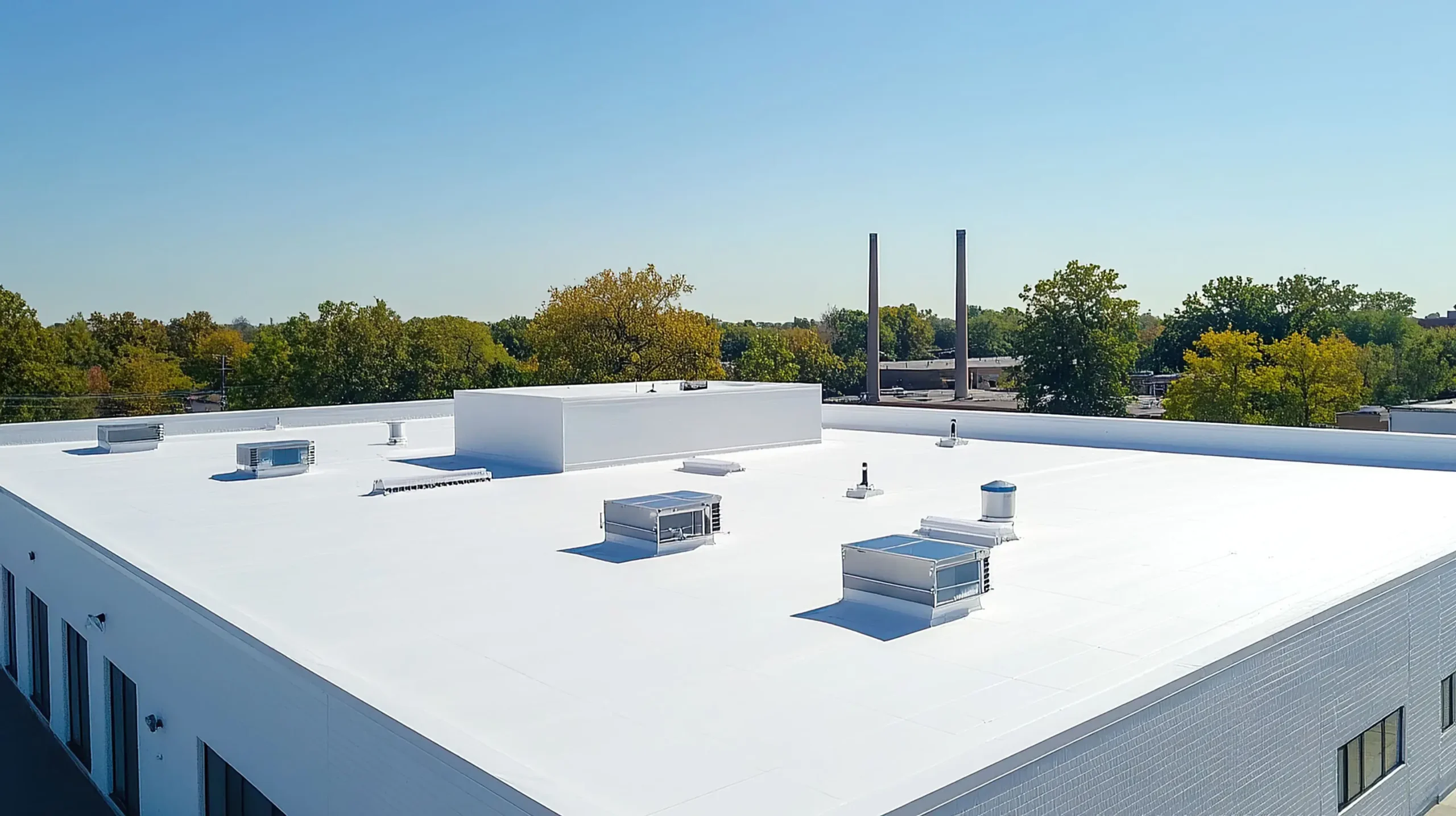
Sundra repairs, restores and replaces commercial roofs across Pennsylvania, New Jersey and Delaware. We document the roof's condition, explain the options and put the proposed work in writing, with access and scheduling considered alongside what is happening inside the building.
The right work for your roof

Repair, restore or replace your commercial roof
The right scope depends on the condition of the whole roof, not just the visible leak. Membrane damage, flashing, drainage, insulation and the deck need to be considered before choosing a repair, coating or replacement.
Repair localized problems
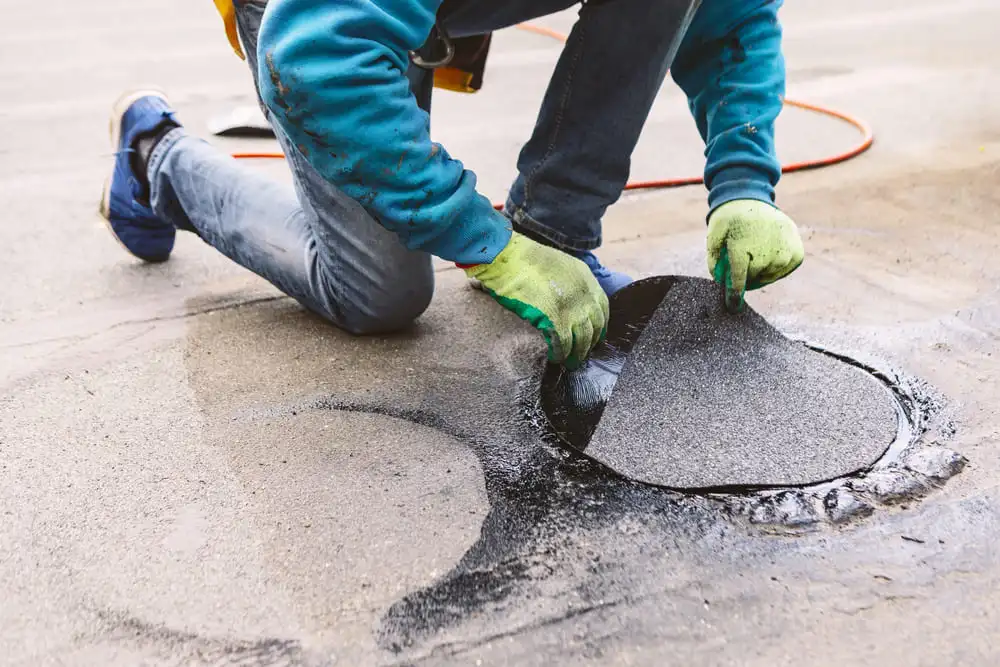
Commercial roof repair addresses identified problems such as damaged membrane, seams or flashing. The assessment should explain what the repair covers and whether surrounding conditions need further work. An isolated repair is a different decision from repeatedly patching a failing system.
Restore a suitable existing roof
Commercial roof coatings may be an option when the existing roof is suitable for the proposed coating system. Surface condition, moisture, drainage, preparation and compatibility must be assessed first. A coating is not a substitute for correcting damaged underlying materials.
Replace when the existing system needs broader work
Commercial roof replacement allows the scope to address membrane, insulation, flashing and other assembly issues together. The proposal should explain whether removal or a recover is appropriate, what happens if concealed damage is found, and how the work will be staged.
Not sure which work your roof needs?
Start with a roof assessment and a written scope for your building.
Choosing a commercial roofing system
Sundra works with flat, low-slope and steep-slope commercial roofs. The material choice follows the building, existing assembly, drainage, rooftop equipment and maintenance needs.
- TPO
- Single-ply roofing on flat and low-slope buildings
- Scope considerations: Membrane specification, attachment, seams, flashing and insulation
- EPDM
- Rubber membrane on low-slope roofs
- Scope considerations: Attachment, seams, perimeter details and rooftop access
- Modified bitumen
- Asphalt-based membrane assemblies
- Scope considerations: Layer configuration, installation method and existing substrate
- Built-up roofing
- Layered low-slope roof assemblies
- Scope considerations: Existing layers, drainage, structural considerations and repair scope
- Metal
- Commercial roofs designed for metal panels
- Scope considerations: Panel system, fasteners, movement and flashing details
- Architectural shingles
- Steep-slope commercial roofs
- Scope considerations: Slope, ventilation, underlayment and flashing
Our TPO, EPDM and modified bitumen comparison explains the main differences. Service life also depends on installation, exposure and maintenance; the commercial roof lifespan guide provides context for that discussion.
What belongs in your roofing scope and estimate?
A useful estimate identifies the work included, the conditions it is based on and the items that could change the price. Roof area alone does not describe the full project.
Existing conditions and proposed assembly
Document the current system, observed damage and drainage concerns. The scope should identify removal or recover, insulation, membrane, flashings, edge details and any deck work included. Concealed conditions and exclusions need a clear treatment in the proposal.
Access, operations and project cost
Building height, access, staging space, rooftop equipment and occupant requirements affect how work is performed. Compare these items alongside material choices and approval requirements when reviewing bids. Commercial financing is a separate discussion from deciding which work the roof needs.
Warranty and closeout records
Identify the proposed warranty, its coverage and any maintenance or registration requirements. The closeout should document completed work and provide the applicable warranty paperwork and maintenance guidance. Warranty terms should be read with the scope, rather than treated as a substitute for it.
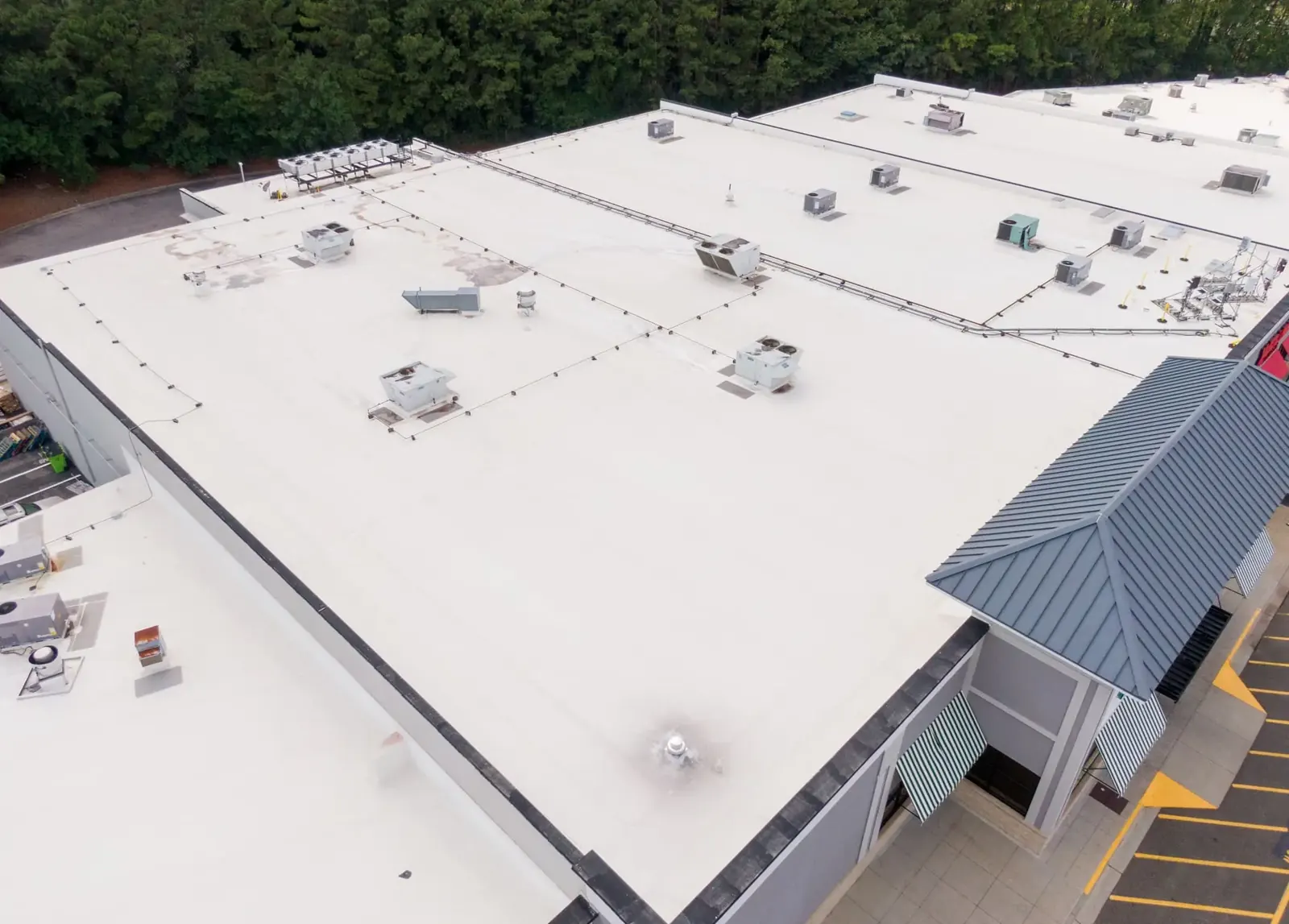
Roofing work around an occupied building
Access, weather protection and communication belong in the work plan before installation. Offices, warehouses, retail centers and multi-tenant properties have different operating constraints, even when they use similar roofing materials.
Agree on the work areas
We discuss roof access, material staging, parking, deliveries and sensitive spaces with the property contact. The plan should identify areas that need protection and any activities that require coordination with occupants or other trades.
Plan the installation sequence
The schedule accounts for the scope, weather, material availability and building operations. Phasing and working hours are agreed for the project. Any anticipated interruption or access restriction should be explained before the affected work starts.
Keep records for the next decision
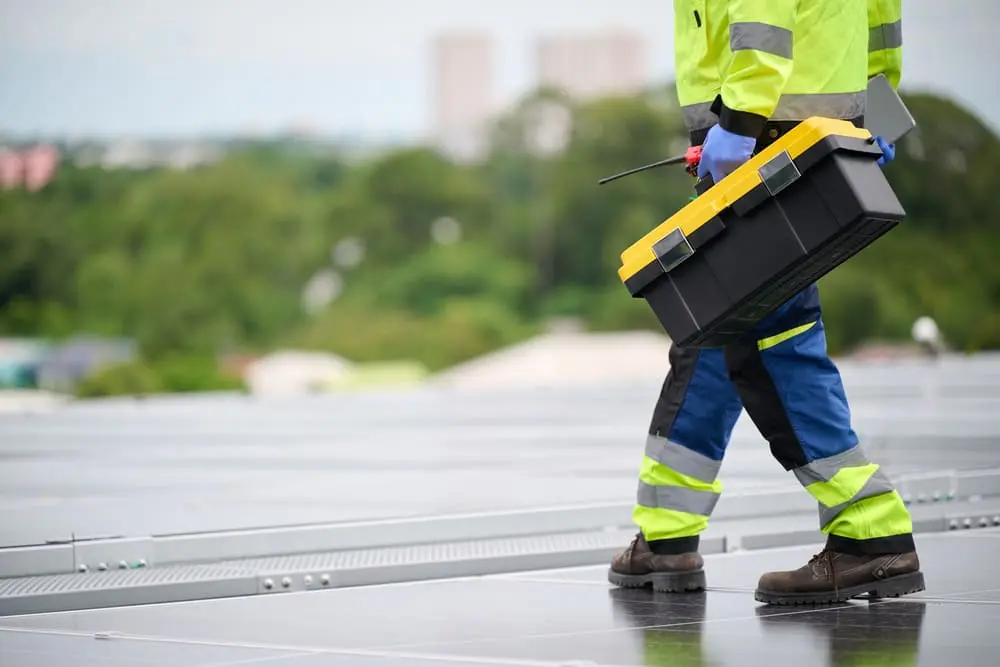
The assessment, scope, progress communication and closeout records give the property team a basis for maintenance and future capital planning. If commercial solar is being considered, review roof condition, access and mounting requirements together through a combined roofing and solar scope.
Commercial roofing across PA, NJ and DE
Roofing for commercial properties throughout all three states. Find services in your area.
These cities are part of our service area, not its limits.
Commercial Roofing FAQs
Do you work on occupied commercial buildings?
Yes. We discuss access, staging, occupant needs and anticipated restrictions with the property contact when planning the scope. Phasing and working hours depend on the project; they should be agreed before work begins.
What types of commercial roofs do you service?
We work with TPO, EPDM, modified bitumen, built-up, metal and architectural shingle systems. The assessment considers the roof assembly and building conditions before recommending repairs or a replacement system.
How much does commercial roof replacement cost?
Pricing depends on the roof area, assembly, existing condition, insulation, flashing and drainage details, access and work included. A written estimate should identify exclusions and how concealed damage would be handled. Our replacement page explains the scope in more detail.
How long does a roofing project take?
Timing depends on the scope, weather, materials, approvals and building operations. Repair, coating and replacement have different work sequences. Ask for the proposed schedule and any expected access restrictions with the estimate.
Can you plan roofing and solar together?
Yes. Coordinating the scopes allows roof condition, mounting, access and future maintenance to be reviewed together. The proposal should identify the roofing and solar responsibilities and the applicable warranties separately.
Do you offer commercial roof maintenance?
Yes. Maintenance can include scheduled inspections, identified minor repairs, drainage checks and condition documentation. Agree on the frequency and included work for your building, and review the roof's warranty requirements.
What should I do about an active leak?
Call 855-278-6372 to discuss the roof issue and scheduling. Describe the affected area and any known damage so the next assessment can be planned. Sundra does not provide emergency dispatch.
Request a commercial roofing estimate
Tell us the property address, the issue or work you are considering, and any known access or operating constraints. We will discuss the assessment needed and the next steps toward a written scope and estimate.
You can also call 855-278-6372 or email the commercial team.