When something goes wrong with your roof like a leak after a storm, missing shingles, or staining on the ceiling, the first question is usually whether you’re looking at a repair or a full replacement. The answer matters because the scope, timeline, and investment between the two are dramatically different.
Here’s what most homeowners don’t realize: by the time a roof problem becomes visible inside your home, the underlying issue has usually been developing for longer than you’d expect. The stain on your ceiling didn’t start today. The missing shingles are a symptom, not the whole story. And a repair that addresses the visible damage without evaluating what’s happening underneath can give you a false sense of security while the real problem continues to spread.
This guide walks through when a repair genuinely makes sense and when it’s just postponing a larger, more expensive problem, so you know what questions to ask and what to look for before the situation gets worse.
When a Repair Might Be the Right Call
A repair can make sense, but only under a fairly specific set of conditions. The problem needs to be genuinely isolated, the rest of the roofing system needs to be in good condition with real life remaining, and there can’t be underlying damage that a surface-level fix won’t address.
In our experience, homeowners tend to underestimate how far roof problems have progressed by the time they become noticeable. That said, here are the situations where a targeted repair is typically appropriate:
Isolated Storm Damage
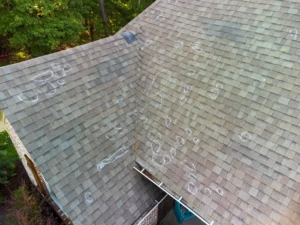
A tree branch punches through a small section. A strong wind lifts a row of shingles along a ridge line. Hail cracks a handful of shingles on one slope while the rest of the roof is untouched. When storm damage is truly confined to one area and the surrounding roof is healthy, a targeted repair restores the roof’s waterproofing without replacing material that’s still performing.
The important caveat: storm damage is often more widespread than it appears from the ground. What looks like a few missing shingles from your driveway can reveal cracked shingles, loosened flashing, and compromised seals across an entire slope when viewed up close. If you suspect storm damage, don’t wait, document it with photos and schedule an inspection with Sundra before the next rain event turns a surface problem into interior water damage. Your homeowner’s insurance may cover the work, but delays in documenting and filing can complicate claims.
Failed Flashing or Pipe Boots
Roof leaks frequently originate not from the shingles themselves but from the transition points where the roof meets another surface, chimneys, walls, plumbing vent pipes, and skylights. The metal flashing or rubber pipe boots at these transitions are common failure points, and replacing them is a routine repair that doesn’t require touching the rest of the roof.
If the leak traces back to a single failed component and the shingles around it are in good shape, the fix is localized.
A Small Number of Missing or Damaged Shingles
Wind can catch the edge of a few shingles and peel them back or tear them off entirely. If the affected area is limited, a few shingles here and there, patching in replacement shingles is a straightforward repair. The replacement shingles may not match the color of the existing roof perfectly (weathering changes the appearance over time), but the repair is functionally sound.
Minor Leak With No Structural Damage
A single leak that’s been caught immediately, within days, not weeks, may be repairable at the source. The key word is “immediately.” A leak that’s been active for even a few weeks has likely caused damage you can’t see from inside the house: wet insulation, moisture-saturated decking, and the early stages of mold growth. By the time you notice a ceiling stain, the water has been traveling along rafters and decking for longer than the stain suggests.
If you have an active leak, contact Sundra now, not after the next storm. Every rain event that passes over a compromised roof makes the eventual fix more extensive.
When Replacement Is the Better Investment
This is where most homeowners end up, even when they came in hoping for a repair. And there’s a reason for that: roof problems that are visible enough to prompt a phone call have usually been developing for a while, and the underlying condition is almost always further along than the surface suggests.
The math on repeated repairs is unforgiving. Each repair carries its own mobilization, labor, and material cost. Two or three repairs over a few years can add up to a significant portion of what a full replacement would have cost, except you’re still left with an aging roof between each one. And every month an aging roof stays in service is another month where undetected water intrusion can damage insulation, decking, framing, and interior finishes. That hidden damage often costs more to fix than the roof itself.
Here’s when replacement is almost always the smarter path:
The Roof Has Reached the End of Its Expected Lifespan
Every roofing material has a usable lifespan. Three-tab asphalt shingles typically last 15-20 years. Architectural shingles last 25-30 years. Metal roofing lasts 40-60 years. Slate can last a century.
If your roof is at or past its expected lifespan, repairs are temporary by definition. The shingles adjacent to the repair are the same age and exposure, they’ll be the next to fail. You’re not fixing the roof; you’re buying a few months before the next call. At this point, replacement isn’t just the better financial decision, it’s the only one that actually resolves the problem.
If you don’t know when your roof was last replaced, Sundra can evaluate the materials, condition, and wear patterns to give you a realistic estimate of where your roof stands in its lifecycle.
Widespread Granule Loss
The granules on asphalt shingles are the first line of defense against UV radiation. As shingles age, they lose granules, you’ll notice them accumulating in your gutters and at the base of your downspouts. When granule loss is widespread (not just one patch or slope, but across large sections of the roof), the shingles have lost their protective layer and will deteriorate rapidly.
Widespread granule loss is a condition, not a single failure point. It can’t be repaired, only replaced. And it’s a condition that accelerates once it starts: as granules shed, the exposed asphalt underneath degrades faster, which causes more granule loss, which exposes more asphalt. The roof is in decline, and the rate of decline is increasing. This is not a situation where waiting helps.
Curling, Buckling, or Cracking Across Large Areas
Shingles that are curling at the edges, buckling upward, or cracking across their surface are telling you the material is failing. When this is happening across entire slopes or sections of the roof, the material has aged past its useful life and no repair will reverse the deterioration.
Curling and buckling can also indicate ventilation problems in the attic, trapped heat and moisture accelerate shingle deterioration from underneath. This is critical because it means the damage isn’t just cosmetic; the conditions causing it are actively working against any remaining shingle life. If ventilation issues exist, they need to be corrected during a replacement and they won’t be addressed by a shingle-only repair. During every roof assessment, Sundra evaluates attic ventilation as part of the full system, not just the surface.
Structural Problems: Sagging or Decking Damage
If the roof deck is visibly sagging, or if an interior inspection reveals wet, spongy, or deteriorated decking material, the issue goes beyond the shingles. Structural damage means the platform the roofing system sits on has been compromised, usually from prolonged water intrusion that went unaddressed.
Structural problems can’t be fixed by replacing shingles. The decking (and potentially rafters or trusses) must be repaired or replaced, and the only way to access them is by removing the existing roofing material. At that point, a full replacement is the practical approach.
Recurring Leaks in Multiple Locations
One leak in one spot is a repair. Leaks showing up in different areas over the course of a year or two is a pattern and the pattern tells you the roofing system as a whole is no longer reliably keeping water out. Each repair addresses the immediate leak, but the next one is already developing somewhere you can’t see.
If you’ve had two or more repairs in different areas within a two-year window, your roof is telling you something. The longer you wait, the more likely it is that the next failure causes damage that goes beyond the roof itself, into the attic, the insulation, the walls, and the ceilings. Replacement isn’t just the practical answer at this point; it’s the protective one.
You’re Planning Solar or Other Rooftop Work
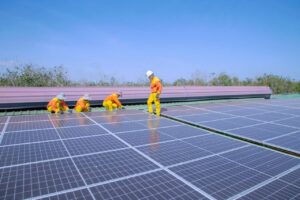
If you’re considering rooftop solar panels, skylights, or other additions that involve penetrating or loading the roof, the condition of the existing roofing system matters. Installing solar on a roof that will need replacement within 5-10 years means you’ll eventually need to remove the panels, replace the roof, and reinstall the panels, a costly and avoidable sequence.
Coordinating a roof replacement with planned rooftop additions ensures you’re building on a sound foundation. This is one of the core reasons Sundra handles both roofing and solar under one company, we assess your roof’s condition before any solar discussion begins, so you’re never installing panels on a roof that can’t support them for the full life of the system.
The Gray Area: Why “Borderline” Usually Means Replacement
Not every decision is obvious, but more often than people expect, the borderline cases lean toward replacement once the full picture is visible. Here’s why.
The Remaining Lifespan Is Shorter Than You Think
Manufacturer lifespan ratings assume proper installation, adequate ventilation, and favorable conditions. In the mid-Atlantic, with freeze-thaw cycles, summer humidity, and regular storm exposure, actual performance often falls short of the rated number. If your architectural shingles are 20 years old on a 30-year-rated product, you may not have 10 years left. You may have 3-5 and that’s if nothing else goes wrong in the meantime.
A repair at that stage buys time, but not much. And the repair investment is gone the moment the replacement happens.
Damage Is Almost Always More Extensive Than It Appears
A useful reality check: if the problem area you can see covers more than about 25-30% of the total roof area, the areas you can’t see are likely in similar condition. Shingles on the same roof, installed at the same time, exposed to the same weather, they age together. The section that failed first won’t be the only section that fails.
The Shingles Aren’t the Whole Story
The condition of flashing, drip edge, ventilation, and especially the decking underneath all factor into the real condition of your roof. We regularly inspect roofs where the shingles look passable from the ground, but the flashing is failing at every transition, the ventilation is inadequate, and the decking has moisture damage from years of slow infiltration. That roof needs replacement, even if the shingles technically have life remaining on paper.
This is exactly why Sundra’s inspection process evaluates the entire roofing system from both the exterior and the attic. The surface doesn’t tell you enough.
Waiting Costs More Than Acting
Exterior material costs have been rising steadily, and that trend is continuing through 2026. A repair that buys your roof 2-3 more years of life, only to face a replacement at higher material and labor costs, isn’t always the savings it appears to be. Factor in the risk of additional water damage during those interim years, and the case for acting now gets stronger.
What Sundra’s Inspection Actually Evaluates
The repair-vs.-replace decision should never be based on a visual impression from the ground, and it shouldn’t be based on a quick walk across the roof either. The issues that determine whether your roof has real life remaining or is actively failing are often invisible from the surface.
Here’s what we evaluate during a Sundra roof inspection:
Shingle condition: granule loss, curling, cracking, missing shingles, and overall uniformity across all slopes, not just the visible faces from the street.
Flashing and transitions: condition of step flashing, counter flashing, valley metal, and all penetration seals (pipe boots, vents, skylights, chimneys). These are where most leaks originate, and they’re where most quick-look inspections stop short.
Ventilation: whether the attic has adequate intake (soffit vents) and exhaust (ridge vent or equivalent) to prevent heat and moisture buildup. Poor ventilation silently destroys roofs from the inside, and it’s one of the most overlooked factors in the repair-vs.-replace equation.
Decking: visible signs of moisture, sagging, or soft spots. We inspect from inside the attic because that’s the only way to see what’s actually happening underneath the shingles. Exterior-only inspections miss this entirely.
Structural integrity: any visible sagging, deflection, or signs of load-bearing compromise that indicate the problem has gone beyond the roofing material.
Gutter and drainage: whether water is being directed away from the structure effectively, and whether gutter condition is contributing to roof-edge deterioration.
Most of the damage that turns a repair into a replacement is damage you can’t see without this level of evaluation. That’s why we do it and why we recommend scheduling an inspection before a small problem has time to become a structural one.
The Cost of Waiting Is Almost Always Higher Than the Cost of Acting
The repair-vs.-replace decision isn’t just about today’s problem, it’s about what happens between now and the next failure. A roof that’s continuously patched but never properly addressed allows small failures to become larger ones. Water damage spreads slowly and invisibly, affecting insulation, framing, drywall, and eventually the structural integrity of your home. By the time interior damage becomes visible, the repair scope has expanded well beyond the roof itself.
Every month a compromised roof stays in service is a month where one storm, one ice dam, or one failed seal can escalate a manageable situation into an emergency. And emergency work, with interior damage, temporary tarps, and urgent timelines is always more expensive and more disruptive than planned replacement.
The homeowners who spend the least over the long run aren’t the ones who repair the longest. They’re the ones who replace at the right time, before the damage compounds. If you’re reading this article because something about your roof is already on your mind, that’s reason enough to get it evaluated.
Don’t Wait for the Next Storm to Find Out
If your roof has visible damage, an active leak, aging shingles, or anything that’s been on your mind, the worst thing you can do is nothing. Roof problems don’t stabilize on their own. They get worse, they get more expensive, and they eventually become emergencies.
Sundra provides free, comprehensive roof inspections that evaluate your entire roofing system, shingles, flashing, ventilation, decking, and structure, from both the exterior and the attic. We’ll tell you exactly where your roof stands and whether a repair or replacement is the right call. No pressure, no guessing, no surprises six months from now.
But if your roof needs attention, the time to find out is now — before the next storm, the next freeze-thaw cycle, or the next price increase changes the equation.
Learn About Our Roofing Services
Roof Repair vs. Replacement FAQs
The decision depends on the age of the roof, the extent and location of the damage, and the condition of the underlying structure. Isolated damage on an otherwise healthy roof with remaining lifespan is typically a repair. Widespread damage, multiple previous repairs, structural issues, or a roof nearing the end of its expected life usually points to replacement.
Three-tab asphalt shingles typically last 15-20 years. Architectural (dimensional) shingles last 25-30 years. Actual lifespan depends on installation quality, attic ventilation, climate exposure, and maintenance. Roofs in the mid-Atlantic region face freeze-thaw cycles, summer heat, and storm exposure that can shorten lifespan if not properly maintained.
Yes. Partial repairs are common and appropriate when the damage is confined to a specific area, a few missing shingles, a localized leak around a pipe boot, or flashing failure at a single transition point. The repaired section may not match the existing shingles perfectly in color due to weathering, but structurally the repair is sound.
Key indicators include widespread granule loss, multiple areas of curling or buckling shingles, daylight visible through the roof deck from inside the attic, sagging roof sections, recurring leaks in different locations, and a roof that has already had several repairs over its lifetime. A professional inspection provides the clearest picture.
It depends on the original material and current condition. A 20-year-old three-tab shingle roof is at or past its expected lifespan, and repairs are often short-term fixes that delay the inevitable. A 20-year-old architectural shingle roof may still have 5-10 years of usable life, making targeted repairs worthwhile if the rest of the roof is sound.
No. A roof leak can result from a single failed component — a cracked pipe boot, deteriorated flashing, or a few wind-damaged shingles — that can be repaired without replacing the entire roof. However, leaks that recur in multiple locations, or leaks that have gone unaddressed and caused structural damage, may indicate that replacement is the more practical solution.
Yes. Sundra’s roof inspection evaluates the condition of the shingles, flashing, ventilation, decking, and structure from both the exterior and the attic, providing a complete picture of what needs attention and whether the overall system is healthy enough for a targeted repair or whether replacement is the better investment. Most of the damage that determines the right path is invisible from the ground.