Commercial solar installation takes 3 to 6 months from signed agreement to operational system. The physical construction is often the shortest phase. The majority of the timeline is engineering, permitting, procurement, and utility interconnection, each with its own requirements and potential for delay.
Most business owners underestimate the process because residential solar has set the expectation that installation happens in a day or two. Commercial projects are fundamentally different. They involve larger systems, structural engineering, utility coordination, and regulatory compliance that residential projects don’t involve.
This guide walks through each phase of a commercial solar installation so you know what to expect, what you’ll need to provide, and where the timeline can expand. The goal is to eliminate surprises. The process itself shouldn’t be a reason to delay a decision that makes financial sense.
Phase 1: Site Assessment and Energy Analysis
Every commercial solar project starts with understanding two things: what the building can support and what it currently consumes. The site assessment answers both.
Roof Evaluation
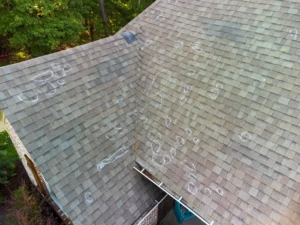
The roof is the foundation for a rooftop solar system. Before any system design begins, the roof needs to be evaluated for structural capacity, remaining lifespan, membrane type and condition, and available area (after accounting for HVAC equipment, vents, skylights, parapet setbacks, and fire code pathways).
If the roof needs replacement or restoration before solar, that work should happen first. Sundra handles both commercial roofing and solar, so the roof assessment and solar assessment happen in a single visit, and if roof work is needed, we coordinate the sequencing so you’re not managing two separate contractors.
Energy Consumption Analysis
Your utility bills for the past 12 months tell us how much electricity the building uses, when it uses it, and what you’re currently paying. This data drives the system design. The goal is to size the array to offset the right portion of your consumption while accounting for seasonal variation, demand charges, and any planned changes to building usage. We’ll also evaluate your utility’s rate structure, net metering policies, and any demand charge implications to ensure the system is designed for maximum financial return, not just maximum panel count.
What You Provide
Access to the roof, 12 months of utility bills, or authorization to pull them from your utility, and basic information about planned changes to the building’s operations or tenancy. This phase requires your involvement, but it’s lightweight, usually one site visit and a few documents.
Phase 2: System Design and Engineering
Timeline: 2 to 4 weeks Once the site assessment confirms the project is viable, the engineering team designs the system.
Electrical and Structural Engineering
Commercial solar systems require professional engineering. That means not just panel layout but structural load analysis (confirming the roof can handle the added weight including wind and snow loads), electrical design (inverter sizing, conduit routing, interconnection point, and code-compliant wiring), and compliance with local building and fire codes. For rooftop systems, this includes verifying that the existing roof structure meets the load requirements specified by the racking manufacturer, and if it doesn’t, identifying what structural reinforcement is needed before installation begins.
System Layout and Production Modeling
The panel layout is designed to maximize energy production within the roof’s usable area, accounting for shading from adjacent structures or rooftop equipment, fire department access and setback requirements, equipment clearance zones around HVAC units and vents, and optimal panel orientation and tilt angle for the building’s geographic location.
Production modeling projects how much electricity the system will generate monthly and annually, factoring in local weather data, panel efficiency, inverter performance, and system losses. This production estimate is the basis for the financial projections that determine your return on investment.
What You Provide
This phase is mostly on the engineering team. You may need to provide structural drawings or as-built plans for the building if available. If they’re not available, the engineering team will work from field measurements and their own structural analysis.
Phase 3: Permitting and Utility Applications
Timeline: 3 to 8 weeks (varies significantly by jurisdiction) Permitting is consistently the longest and least predictable phase of a commercial solar project. Sundra handles all permitting paperwork, but the timeline depends on the local authority having jurisdiction (AHJ) and the utility.
Building and Electrical Permits
Commercial solar requires building permits and electrical permits at minimum. The permit application includes engineered plans, structural analysis, electrical diagrams, and equipment specifications. Some jurisdictions also require zoning review, fire department review (particularly for access pathways and rapid shutdown compliance), and historical or aesthetic review in designated districts. Permit review timelines vary widely. Some municipalities process commercial solar permits in 1 to 2 weeks. Others take 4 to 8 weeks or more, particularly for larger systems or in jurisdictions with limited staff. Sundra’s experience with prior projects across the tri-state area means we can give you a realistic timeline estimate for your specific municipality before the project begins.
Utility Interconnection Application
The interconnection application tells your utility that a solar system will be connected to the grid at your location. The utility reviews the application to confirm that the local grid infrastructure can support the system’s output without upgrades and to establish the metering and billing arrangement (typically net metering for systems under a certain size).
In most cases, the interconnection application is submitted concurrently with the building permit, so these timelines run in parallel, not sequentially. However, some utilities have significant backlogs that can delay approval.
Incentive and SREC Registration
If the project qualifies for SRECs (Solar Renewable Energy Credits) in New Jersey or Pennsylvania’s SREC-II program, registration must be completed in accordance with program timelines. For federal incentives including the Section 48E Investment Tax Credit, documentation of construction commencement may need to be established during this phase if the project is tracking against the July 4, 2026 deadline.
What You Provide
Authorization for Sundra to submit permit applications and utility paperwork on your behalf. You may need to sign interconnection agreements and authorize us as your representative with the utility. We handle all the preparation and submission.
Phase 4: Procurement
Timeline: Runs in parallel with permitting (2 to 6 weeks) Once the system design is finalized, equipment is ordered: panels, inverters, racking, wiring, and balance-of-system components. Procurement timelines depend on equipment availability, manufacturer lead times, and any supply chain constraints affecting the specific products specified in the design. In 2026, supply chain dynamics are worth monitoring. Domestic content requirements for enhanced ITC bonuses, restrictions on components from certain foreign entities (FEOC/PFE rules), and general demand fluctuations can all affect lead times. Sundra manages procurement early in the process to avoid construction delays. Most installers order equipment during the permitting phase so both tracks complete around the same time. Permits in hand, equipment on-site, ready for construction.
Phase 5: Construction
Timeline: 2 to 6 weeks (depending on system size and complexity) Physical construction is often the fastest phase of the project. For a typical commercial rooftop system, construction breaks into four stages:
Racking Installation
The mounting system is installed first, either ballasted racking on flat roofs or mechanically attached racking on sloped roofs. Racking is the structural connection between the panels and the roof, and proper installation is critical for both performance and roof integrity. On membrane roofs, attachment methods must be compatible with the roofing system and should not compromise the warranty.
Panel Installation
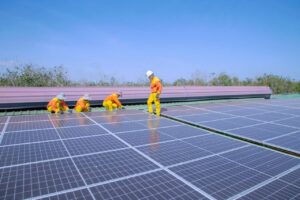
Solar panels are mounted onto the racking system. For commercial systems, panels are typically arranged in rows with spacing calculated for maintenance access and to minimize row-to-row shading. This phase moves quickly once racking is in place. An experienced crew can install panels rapidly once the structural foundation is set.
Electrical Work
Wiring, conduit, inverters, disconnects, and monitoring equipment are installed and connected. The electrical work connects the panels to the inverters, the inverters to the building’s electrical system, and the monitoring system that tracks real-time production. All electrical work must comply with NEC (National Electrical Code) and local amendments.
What You Provide
Roof access, access to the building’s electrical service entrance, and coordination with building operations to schedule the brief power interruption required for final electrical connection. Construction crews work primarily on the roof, and normal building operations continue below without interruption during most of the installation.
Phase 6: Inspection and Interconnection
Timeline: 2 to 8 weeks after construction The system is built but can’t operate until it passes inspection and receives Permission to Operate (PTO) from the utility.
Municipal Inspection
The local building department inspects the completed installation to verify it matches the permitted plans and complies with building and electrical codes. Most commercial solar inspections are straightforward if the installation follows the engineered design, but scheduling the inspection and receiving the approval can take days to weeks depending on the municipality’s backlog.
Utility Inspection and PTO
After passing municipal inspection, the utility conducts its own review (or accepts the municipal inspection results) and issues Permission to Operate. Once PTO is granted, the system is energized, the meter is configured for net metering, and the array starts generating electricity and credits. The gap between construction completion and PTO is the most frustrating part of the process because the system is physically complete and sitting on the roof, but can’t be turned on until the utility completes their process. Timelines vary by utility, and some have significant queues.
Commissioning and Monitoring Setup
Once PTO is received, the system is commissioned and tested to verify all components are functioning correctly and that production matches projections. Monitoring software is configured so the building owner can track real-time and historical production data, system health, and energy offset performance.
Typical Overall Timeline
For a standard commercial rooftop solar installation in PA, NJ, or DE, expect 3 to 6 months from signed agreement to operational system. Larger or more complex projects, slow permitting jurisdictions, and utility backlogs can push that to 9 months or more. The most common delays are permitting (especially in jurisdictions that don’t process many commercial solar applications), utility interconnection timelines, and equipment lead times when specific products face supply constraints. Starting the process early gives you buffer, particularly if you’re tracking against incentive deadlines. It provides room for the phases you can’t control.
Ready to See What the Process Looks Like for Your Building?
Ready to See What the Process Looks Like for Your Building? Every commercial solar project starts with a site assessment, evaluating your roof, reviewing your energy consumption, and determining what a system would look like for your specific building. Sundra handles roofing and solar together and assesses both in a single visit and ensure the foundation is right before designing the system. The first step is a conversation. We’ll walk you through what the timeline looks like for your property and what you can expect at each phase.
Learn about our commercial solar services
Commercial Solar Installation FAQs
How long does a commercial solar installation take from start to finish?
Most commercial solar installations take 3 to 6 months from signed agreement to operational system, though the range can extend to 9 months or more for larger or more complex projects. Physical construction is often the shortest phase, typically 2 to 6 weeks depending on system size. The majority of the timeline is consumed by engineering, permitting, utility interconnection, and procurement.
Does my building need a new roof before installing solar?
If your roof will need replacement within the next 10 to 15 years, it should be replaced before solar panels are installed. Removing and reinstalling a solar array to replace the roof underneath adds significant cost and downtime. Sundra assesses your roof’s condition and remaining lifespan as part of every commercial solar proposal and handles the roofing work if it’s needed first.
Will solar installation disrupt my building’s operations?
Rooftop solar installation on commercial buildings typically causes minimal disruption. Most work happens on the roof and at the electrical service entrance. Interior access may be needed briefly for electrical connections. There is usually no need to shut down operations during installation, though a brief planned power interruption is required for final interconnection to the building’s electrical system.
What does the building owner need to provide during the process?
Building owners typically need to provide access to 12 months of utility bills, roof access for site assessment, authorization for permit applications and utility interconnection paperwork, access to the building’s electrical panel and service entrance, and coordination with any tenants who may be affected by brief power interruptions during final connection.
What permits are required for commercial solar in PA, NJ, and DE?
Commercial solar projects require building permits and electrical permits at minimum. Depending on the jurisdiction, structural engineering stamps, zoning approval, fire department review, and utility interconnection agreements may also be required. New Jersey SRECs and Pennsylvania SREC-II programs have additional registration requirements. Sundra handles all permitting on behalf of the building owner.
What is utility interconnection and how long does it take?
Utility interconnection is the formal process of connecting your solar system to the electric grid so it can export excess power and so your meter tracks net usage correctly. It involves submitting an application to your utility, completing inspections, and receiving Permission to Operate. Interconnection timelines vary by utility but typically take 2 to 8 weeks after construction is complete. Some utilities have backlogs that can extend this timeline.
Can I use my building during solar construction?
Yes. Commercial solar construction is designed to proceed without disrupting building operations. The work is primarily on the roof and at the electrical interconnection point. Normal business activities continue throughout construction. The only operational impact is a brief planned power interruption, typically lasting a few hours, during final electrical connection.