
Roof Leak or Condensation? What Commercial Building Owners Should Record
A wet ceiling doesn't prove a roof leak. How rain entry, condensation and other moisture sources differ, and what an owner should log before an evaluation.
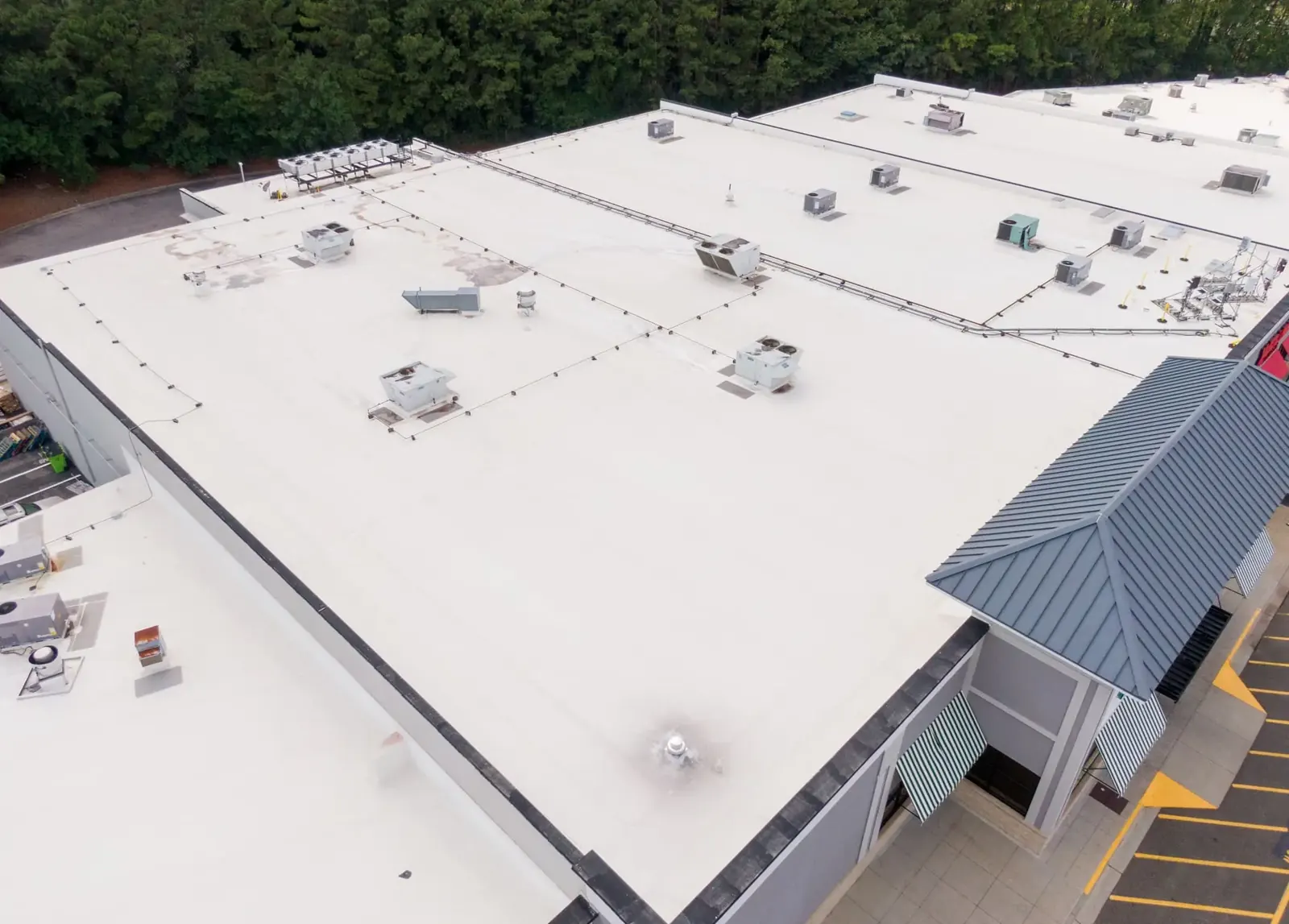
A wet ceiling tile doesn't tell you whether the roof is leaking. Rain coming through an opening in the roof is one possibility. Condensation forming on a cold surface inside the assembly is another. Plumbing, HVAC condensate, a wall or window leak, or moisture left in the building's own materials are others, and they all look about the same from below. So the most useful thing an owner can do is record when the moisture appears and under what conditions, then hand that record to someone who can investigate.
This guide explains the main moisture sources, which observations help tell them apart, and what can't be concluded from a stain or a photograph. It isn't a diagnostic decision tree. The cause in a particular building has to be established on site.
In this article
Why interior moisture doesn't identify the source
The location of a stain is weak evidence on its own, for three reasons.
First, water can travel within a roof or wall assembly before it becomes visible indoors. A ceiling stain records where moisture reached the room, which may differ from its entry point. The WBDG moisture-management guidance describes several ways moisture can enter and move through a building, including through its enclosure and mechanical systems.
Second, condensation can produce water without a hole in the roof. Moist air meeting a sufficiently cold surface can deposit liquid water. GAF’s low-slope moisture guidance describes condensation within roof assemblies and the influence of indoor moisture. Cold surfaces above a ceiling, including equipment and piping, can also require investigation.
Third, moisture can come from plumbing, equipment or construction materials. GAF identifies construction moisture, including water in concrete decks, as a concern that cannot be resolved by assuming the deck is dry after a particular curing period. Recent construction or a change in building use belongs in the investigation record.
The main possibilities, side by side
The table describes patterns that tend to accompany each source. They're hypotheses to test rather than rules. Buildings can have more than one source at once, and some patterns overlap.
| Possible source | Conditions that often accompany it | What it doesn't prove |
|---|---|---|
| Rain or snowmelt entering through the roof | Appears during or shortly after precipitation; may follow wind from a particular direction; may track to a seam, flashing, drain or rooftop equipment curb when traced | Timing with rain also fits wall and window leaks and overflowing gutters |
| Condensation within the roof assembly | Appears in cold weather, often on clear cold mornings or during a thaw; may be absent in summer; may be spread along deck joints or around fasteners rather than at one point; worse in humid spaces | A winter drip can also be rain or snowmelt entering through ice-damaged details |
| Condensation on cold equipment above the ceiling | Appears in humid weather when cooling equipment runs; located under ducts, chilled lines or air handlers; may be worst in summer | A summer drip also fits a rain leak during summer storms |
| Wall, window or parapet entry | Stains high on exterior walls, at window heads or sills, or at the roof-to-wall line; may depend on wind direction | Can be confused with a roof leak near the perimeter |
| Plumbing, HVAC condensate or roof-drain piping | Follows use of the fixture or equipment, not the weather; often under a drain line or a mechanical room | A leaking roof drain pipe is below the roof but still part of the drainage system |
| Construction or renovation moisture | New building, new concrete deck, or recent wet-process work; appears without a weather pattern and may persist as materials dry | Can coexist with a genuine leak |
Timing and weather are the strongest clues an owner can supply, and none of them settles the question by itself.
What to record
Start a log the first time moisture appears and keep it until the cause is established and corrected. Each entry should capture the following.
When. Date and time first noticed; whether it was wet, damp or a dry stain at that moment; whether it has appeared before and when.
Weather. Whether it was raining and how hard; whether it followed snow, a thaw or freeze-thaw cycling; whether it was a cold clear morning or a humid afternoon; wind direction if the building is exposed. A phone weather history is enough. The aim is to be able to say later whether the moisture tracks rainfall, cold, humidity or none of them.
Where. Mark the location on a floor plan or a reflected ceiling plan, and note the floor and the room. Note what's directly above it, if you know: roof field, a rooftop unit, a drain, a parapet, a duct run, a pipe chase. If the ceiling is accessible from a ladder or lift that your staff are trained and equipped to use, note what the underside of the deck or the top of the ceiling tiles look like; otherwise leave that to the evaluator.
Building conditions. Note occupancy and hours, operation of cooking, washing or other moisture-producing equipment, and whether the HVAC was heating, cooling or off. Include recent tenant or equipment changes. These observations help an evaluator assess indoor moisture sources alongside possible rain entry.
Recent work. Any roofing, HVAC, plumbing, electrical, solar or signage work on or near the roof, with dates. New penetrations and equipment curbs are common entry points; new insulation or a change in ventilation can shift where condensation forms. Include prior repairs at or near the same location and whether they held.
Photographs. Dated, located, taken from the floor or from a safe position. Photograph the stain, its extent, any drip, and the ceiling or wall around it. Repeat after each new event so the record shows whether the area is growing. A photograph records appearance. It doesn't record cause, and it cannot establish the cause by itself.
Interior readings, if you have them. If the building logs indoor temperature and relative humidity, retain the readings around each event. They may help the evaluator compare conditions when moisture appeared and when it did not. They cannot identify the source on their own.
What can't be inferred from stains or photos
A few conclusions get drawn all the time and shouldn't be.
- "The stain is here, so the leak is above it." Water travels. Entry can be well away from the exit.
- "It only happens in winter, so it's condensation." Winter also brings ice at drains and scuppers, snow that melts into details, and freeze-thaw movement at flashings. The pattern points one way without proving it.
- "The roof is new, so it can't be the roof." New roofs have new seams, new flashings and new penetrations, and new concrete decks hold construction moisture.
- "The roof is old, so it must be the roof." Age alone does not rule out a window head, a duct or a drain line.
- "There's no visible damage on the roof, so the water is coming from inside." Entry points at seams, laps and terminations are often invisible from a walk-over and need testing to find.
- "A brown ring means rain." Stain color reflects what the water passed through on the way, and says nothing about where it started.
A photograph can establish extent and change over time. A log can tie events to conditions. Neither replaces testing inside the assembly.
What a professional investigation involves
An evaluator uses the owner's log to decide where to look and what to test.
Depending on the pattern, that can include a walk-over of the roof above the affected area with attention to seams, flashings, penetrations, drains and the roof-to-wall line; moisture testing of the assembly to find wet insulation and map its extent; water testing of suspect details; inspection above the ceiling for condensation on the deck, ducts or piping; and measurement of indoor humidity and surface temperatures where condensation is suspected. Ask the evaluator to distinguish observations from suspected causes and to explain what any proposed testing would establish.
The findings help identify the appropriate trade. Indoor humidity, ducts or cold surfaces may require mechanical or building-science expertise; window entry or drain-line failures may require another trade. The report should state what was established and what remains uncertain.
If the roof has a manufacturer guarantee, read its reporting requirements while the investigation is underway. The GAF Diamond Pledge specimen distinguishes covered roof leaks from certain interior or surrounding-building moisture sources and requires direct written notice. Missing a notice window can jeopardize coverage; do not assume that notifying a contractor satisfies the manufacturer’s terms.
Keeping the record useful
Whatever the finding, add the report to the same file as your log, and keep logging after the repair so you can confirm the problem actually stopped. Moisture that returns after a repair needs further investigation.
The commercial roof maintenance planning guide explains how inspection and repair records fit into an ongoing program, and the commercial roof lifespan guide explains why a leak by itself says nothing about the roof's remaining life. A localized entry point and widespread deterioration are different findings with different consequences.
Talk to Sundra about a suspected roof leak
You do not need to decide whether a ceiling stain is rainwater or condensation before contacting us. For a building in Pennsylvania, New Jersey or Delaware, start with Sundra's commercial roof repair services when roofing is a suspected source.
Your log helps explain the pattern; the assessment scope should establish what can be checked and whether another specialist is needed.
Request a roof repair assessment from Sundra and describe when the moisture appears, the affected rooms and any previous repair. Keep your dated photos and weather notes available. The purpose is to identify the roofing work, if any, that the findings support before committing to another patch.
Roof leak or condensation FAQs
Can you tell from a photo whether it's a leak or condensation?
Can you tell from a photo whether it's a leak or condensation?
No. A photo shows extent and appearance. The cause depends on timing, conditions and what's inside the assembly, which requires investigation on site.
Why does the ceiling only get wet in winter?
Why does the ceiling only get wet in winter?
Cold weather is when indoor moisture is most likely to condense on cold surfaces, so condensation is one possibility. It's also when ice forms at drains and scuppers and snowmelt finds its way into details. The log of weather and building conditions helps separate those.
Should I report it to the roofing manufacturer if I think it's condensation?
Should I report it to the roofing manufacturer if I think it's condensation?
If the roof is under a manufacturer warranty, report any leak in writing within the warranty's notice period regardless of suspected cause. The investigation determines coverage, and the deadline doesn't wait for it.
Is condensation a roofer's problem or an HVAC problem?
Is condensation a roofer's problem or an HVAC problem?
It can be either or both. Condensation inside the roof assembly involves the roof's air and vapor control layers. Condensation on ducts and piping involves the mechanical system. The investigation should say which, and may recommend another specialist.
Sources
- WBDG: Moisture Management. Enclosure and mechanical-system interactions and several moisture-entry mechanisms.
- GAF: 3 Types of Moisture in Low-Slope Roofing Systems. Interior moisture, condensation and construction moisture in roof assemblies.
- GAF Diamond Pledge NDL Roof Guarantee specimen. Example of moisture exclusions and direct written-notice requirements. Your issued warranty governs.