
TPO Roofing for Commercial Buildings in PA, NJ & DE
Heat-Welded Single-Ply for Flat and Low-Slope Roofs
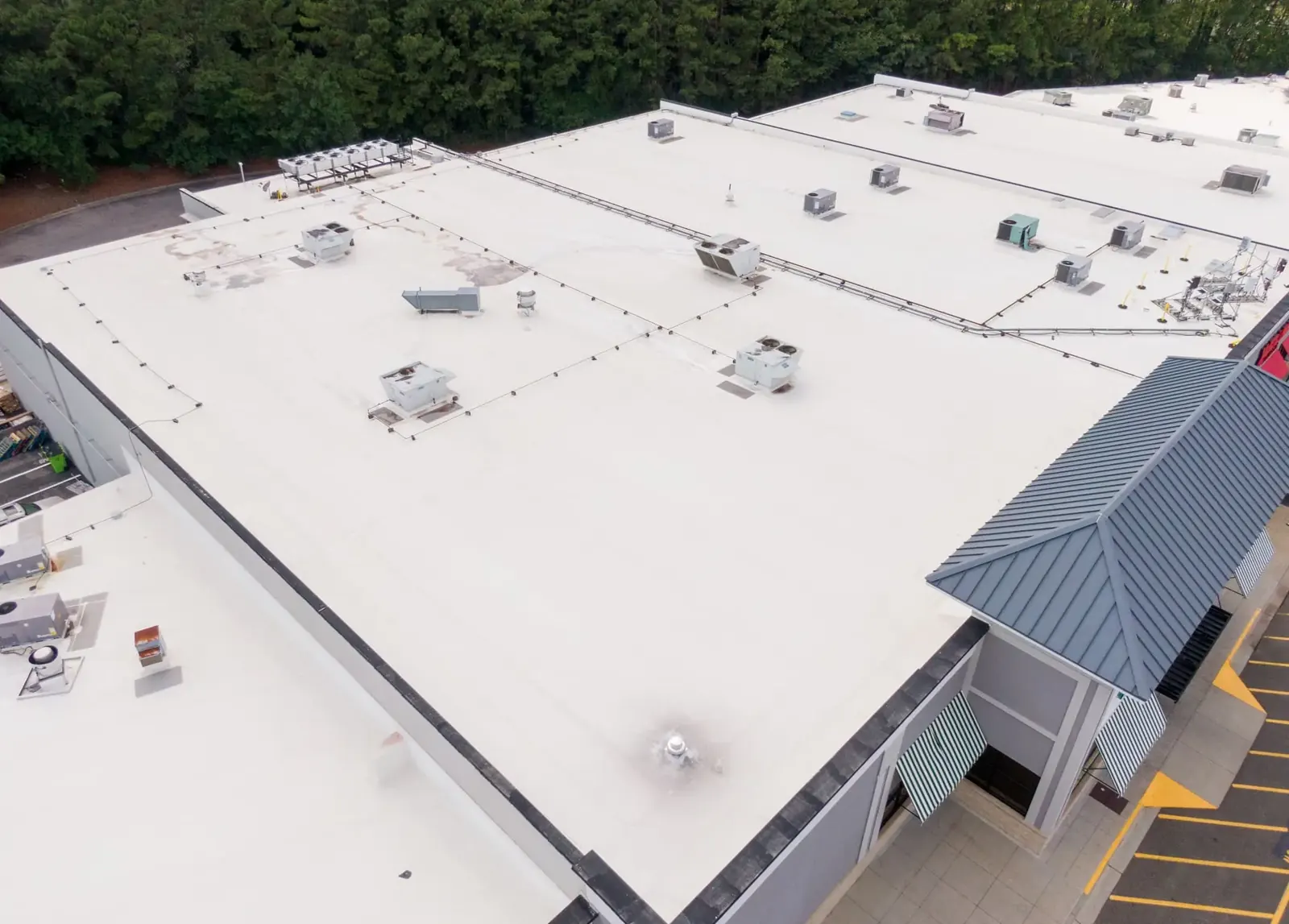
TPO roofing is a single-ply membrane, thermoplastic polyolefin, installed on flat and low-slope commercial roofs with seams that are heat-welded into one continuous surface.
- Free quote
- Written scope
- No meeting needed

What is TPO roofing?
TPO is a flexible single-ply sheet, typically 45, 60, or 80 mil thick, rolled out over insulation and fastened mechanically, fully adhered, or ballasted. The seams are welded with hot air rather than glued, and a properly welded seam is as strong as the sheet itself, which matters because seams are where most flat roofs eventually leak. Sixty mil is the common commercial specification; 80 mil earns its cost on roofs with heavy foot traffic or equipment service.
What does TPO roofing cost?
TPO sits mid-range among single-ply systems, and the membrane itself is rarely what moves the price. The number is set by insulation scope (R-30 continuous is the usual code requirement here), deck condition, penetration count, attachment method, and access. A recover over a sound, dry, single-layer roof costs meaningfully less than a tear-off. Every Sundra proposal itemizes these factors for your building, and the assessment that produces it is free.
Get your building priced without a meeting
Options and pricing in writing, built for capital planning.
- Free quote
- Written scope
- No obligation
TPO vs EPDM
The two dominant single-ply membranes solve different problems. The short version:
| TPO | EPDM | |
|---|---|---|
| Surface | White, reflective | Black (white available) |
| Seams | Heat-welded | Taped or adhesive |
| Typical service life | 15 to 25 years | 15 to 25 years |
| Strongest case | Cutting summer cooling loads | Freeze-thaw flexibility, budget |
Air-conditioned buildings with big flat roofs usually come out ahead on TPO; unconditioned warehouses and budget-driven projects often favor EPDM roofing. The full comparison, including modified bitumen, is in our membrane guide.
TPO installation and replacement
Mechanically attached systems are the workhorse: fast, wind-rated, and economical. Fully adhered installations eliminate flutter and read cleaner on architectural roofs. Ballasted assemblies suit structures engineered for the weight. The assessment settles attachment method, insulation scope, and whether your existing roof qualifies for a recover instead of a full replacement. Work is phased in sections so the building stays open.
TPO repair
TPO's repairability is one of its best traits: while the membrane is young enough to weld, a trained crew can patch punctures and re-weld failed seams to like-new strength. Aged TPO oxidizes and eventually stops taking a weld, which is when repairs shift to alternative methods and the repair-versus-replace math changes. Leak diagnosis, seam work, and flashing repairs run through our commercial roof repair service.
Solar on a TPO roof
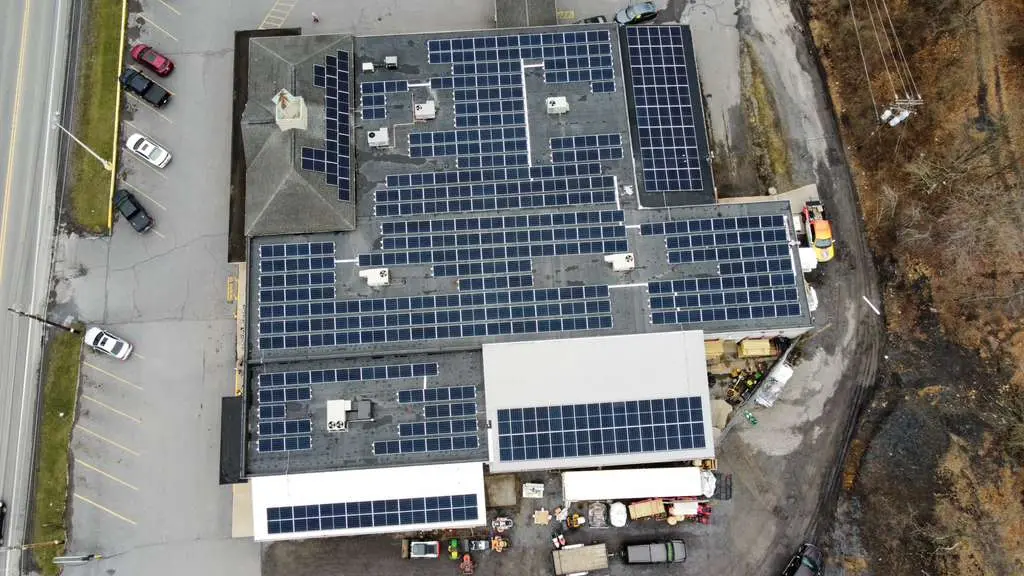
TPO and rooftop solar pair well: ballasted racking sits on the membrane without penetrations, and the reflective surface keeps panel operating temperatures down. The rule that matters is age alignment, because panels produce for 25 to 30 years and should sit on a membrane with matching life. If solar is in the plan, roof and array as one project is the cost-efficient order, designed alongside our commercial solar team.
The work, and the people who hired us
“Sundra coordinated roofing and drainage work without disrupting operations. Communication stayed tight throughout.”


TPO Roofing FAQs
How long does a TPO roof last?
15 to 25 years, driven by membrane thickness, installation quality, and maintenance. Documented semi-annual inspections keep manufacturer warranties valid and typically land roofs at the top of that range.
Is TPO better than EPDM?
Neither wins outright. TPO's reflectivity pays on air-conditioned buildings; EPDM's elasticity and lower installed cost fit unconditioned space and tight budgets. The assessment prices both for your building so the decision is numbers, not preference.
What thickness of TPO should a commercial roof use?
60 mil is the standard commercial specification. 45 mil suits budget-driven, low-traffic roofs; 80 mil is the call for heavy foot traffic, equipment service paths, or owners who want maximum service life.
Can a TPO roof be repaired instead of replaced?
Yes, while the membrane still takes a weld. Punctures, seam failures, and flashing problems are all repairable on younger TPO. Once the membrane oxidizes and welding stops holding, each repair buys less time, and the assessment shows when replacement becomes the cheaper decade.
Can TPO be installed over an existing roof?
Often, yes. A recover requires a dry existing assembly, a sound deck, and a single existing roof layer, since codes generally cap assemblies at two. The moisture scan makes the call with data.
Get Your TPO Roof Scoped
Installation, repair, or replacement, the first step is the same: a free quote with every option priced in writing, from photos and aerial measurement.
Let's look at your property
Send photos or a recent electric bill and we price your options in writing. A site visit happens when you want one, not before. No pressure, no obligation.
801 Bridgeboro Rd, Edgewater Park, NJ 08010
- 1We look at the building and confirm the scope. Free, no strings.
- 2You get a written assessment with real numbers and options.
- 3You decide on your own timeline. No chasing, no pressure.
Get a free estimate
Tell us about your property. We reply in writing with real numbers.