
Silicone Roof Coating Pros and Cons for an Existing Flat Roof
Compare silicone roof coating pros and cons: water tolerance, dirt pickup and recoat limits. Learn what an existing flat roof needs before coating.
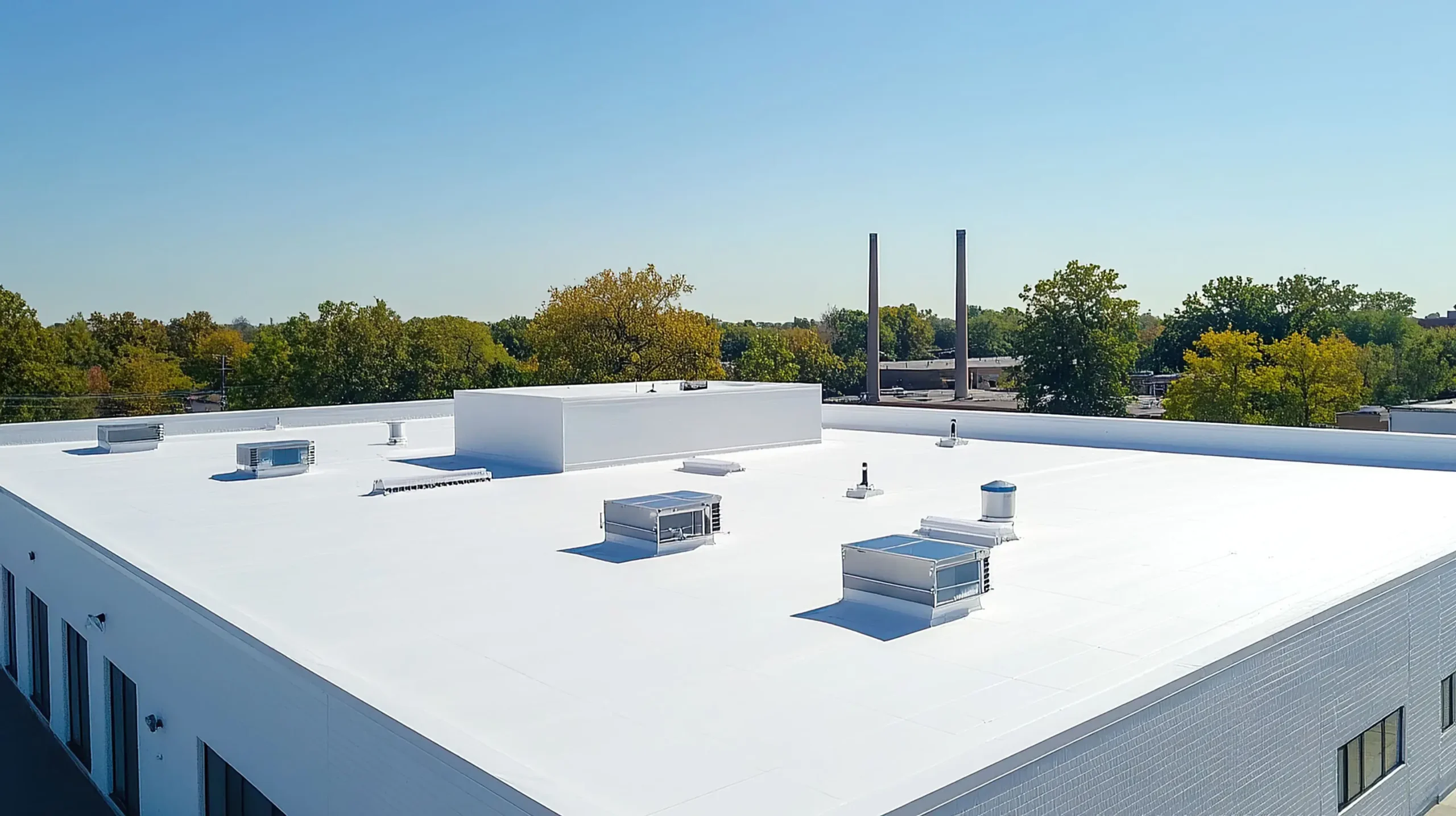
Silicone roof coating can offer weather resistance and tolerance of standing water, but it also brings dirt pickup, a slippery surface and constraints on future recoating. Whether those tradeoffs suit a commercial flat roof depends on the roof underneath: its condition, moisture, drainage and ability to accept the coating.
For an owner comparing options, the useful question is whether a specified coating system is suitable for the existing assembly. A product's advantages do not establish that the roof qualifies, or remove the repairs and preparation needed before application.
In this article
What is a silicone roof coating?
A silicone roof coating is a liquid-applied material that cures into a continuous weathering surface. It bonds to an approved, prepared roof substrate. It does not replace the structural deck or correct every defect in the assembly below it.
High-solids products leave much of the applied material in the cured film. Some permit a relatively thick single application, but the number of coats depends on the product, substrate and required finished thickness. The specified system determines the work, including treatment of seams and penetrations.
GAF's High Solids Silicone data sheet, for example, describes approved substrates, preparation, application limits and conditions for a single pass. Those instructions apply to that product, not to every silicone coating.
What are the main pros and cons?
The advantages and limits need to be considered together. Water tolerance does not fix a drainage defect, and initial reflectivity does not describe a dirty or aged surface.
| Characteristic | Potential benefit | Limitation to evaluate |
|---|---|---|
| Standing-water tolerance | Some silicone products tolerate prolonged water exposure | The roof still needs drainage assessment and compliance with the specified system's requirements |
| Weathering and UV resistance | The coating can form a durable weather surface on a suitable roof | Performance depends on preparation, thickness, detailing and maintenance |
| Reflective finish | White products can reflect a substantial share of incoming sunlight | Dirt and aging affect reflectivity; this does not establish a building's energy savings |
| Application thickness | Some high-solids products allow fewer field-coating passes | Seams, repairs, primer and additional coats may still be required |
| Substrate compatibility | Products are available for several existing roof materials | Approval and preparation are product-specific; compatibility cannot be assumed |
| Future maintenance | Compatible silicone may be used for later recoating | Switching chemistry can be difficult and requires manufacturer guidance and adhesion testing |
Polyglass's PolyBrite 90.2 data sheet illustrates the distinction between a silicone product's ponding tolerance and the continued importance of drainage. It also lists substrate exclusions and preparation requirements. Read the actual product document rather than treating the word silicone as a complete specification.
What disadvantages matter during ownership?
Dirt pickup, foot traffic and future recoating should be part of the decision before installation. Polyglass's manufacturer discussion of silicone coatings identifies dirt accumulation, slipperiness, recoat challenges and vulnerability to tearing without appropriate reinforcement.
A roof with frequently serviced mechanical equipment needs an approved access and walkway arrangement. Ask how the specification protects service paths and how other trades will avoid damaging the finished surface.
Cleaning and inspection also belong in the ownership plan. If reflectivity is part of the reason for coating, ask what maintenance is recommended and what aged product data is available. Don't turn a clean-surface rating into a promised bill reduction.
For future work, keep the exact product and installation records. A later contractor needs to know what is already on the roof before selecting a repair or recoat material. Manufacturer confirmation and testing are more useful than a blanket promise that another chemistry will bond.
What has to be checked before coating?
A suitable roof needs a sound, compatible substrate and a defined plan for moisture, repairs and drainage. The assessment should establish these conditions before a proposal presents coating as the answer.
Moisture and underlying condition
Wet insulation and damaged materials need to be identified and addressed. GAF's liquid-applied manual requires wet insulation removal before coating and a moisture survey for its specified NDL coating guarantee. The scope of investigation and acceptance criteria depend on the proposed system.
Ask for a map of findings, the method used and the repair scope. If substantial areas are wet or deteriorated, compare the full remedial work with other roofing options. Coating should not be used to conceal an unresolved condition.
Drainage
A coating changes the surface; it does not create slope or enlarge a drain. GAF's manual calls for positive drainage and correction of ponding areas before coating. Other product documents may state different conditions, so verify the specification for the proposed system.
Ask the contractor to distinguish material tolerance of water from correction of the reason water remains. A chronic pond still needs an explanation.
Adhesion and preparation
Adhesion testing checks whether the proposed material bonds to the actual roof. GAF's manual describes test patches and product-specific preparation. Cleaning, repairs, drying and any required primer belong in the written scope.
The proposal should identify how seams, flashings and penetrations will be treated. Coating the open field is only part of the work.
Substrate eligibility
The existing surface must be approved for the system. GAF's cited manual excludes gravel-surfaced built-up and modified bitumen roofs as direct coating substrates. Polyglass identifies other exclusions for its product. A contractor should resolve eligibility with the manufacturer before pricing a coating application.
What should a silicone coating proposal include?
A useful proposal connects the condition findings to the product and installation method. Compare these items across proposals:
- The roof areas assessed, findings and any limits on the investigation.
- Moisture findings and the scope for removing or repairing affected materials.
- Drainage observations and proposed corrections.
- Adhesion results for the actual substrate.
- Cleaning, repairs, drying, primer and seam or flashing treatment.
- Product identity, specified finished thickness and applicable manufacturer instructions.
- Walkway provisions and maintenance requirements.
- The proposed warranty, exclusions, registration and installer requirements.
Compare the complete installed scope rather than price per gallon. Preparation, access, repairs and detailing can change the work substantially. A price comparison that leaves those items out may be comparing different projects.
How does coating fit among the roof's other options?
Coating may be worth evaluating when the existing assembly is suitable and the surface needs restoration. Where conditions require extensive repairs, compare the total coating preparation and application scope with the alternatives.
The commercial roof lifespan guide explains condition-based planning, and the TPO, EPDM and modified bitumen comparison explains the differences among replacement systems. Neither the roof's age nor a coating warranty term settles the choice by itself.
Whichever option is selected, include its care requirements in the commercial roof maintenance plan.
Discuss coating and replacement options with Sundra
Before committing to silicone, bring the roof's repair history and any moisture findings to Sundra. Our commercial roofing services cover repair, restoration and replacement across Pennsylvania, New Jersey and Delaware, so the conversation can consider the work the existing assembly needs before selecting a finish.
Request a roofing estimate from Sundra and mention that you are evaluating a coating. Ask which preparation, drainage corrections and underlying repairs belong in the price, and whether the roof is a suitable candidate. That gives you a clearer basis for comparing a coating proposal with other roofing work.
Silicone roof coating FAQs
Does silicone coating stop leaks?
Does silicone coating stop leaks?
A properly specified coating system can address suitable surface conditions after required repairs. It does not resolve every leak source, wet material or structural problem. The investigation should establish the source before coating is proposed.
Can silicone be applied over a roof that ponds?
Can silicone be applied over a roof that ponds?
Some products tolerate standing water, but that does not make every ponding roof suitable. Follow the product's drainage and substrate requirements and address the reason water remains.
How long does a silicone coating last?
How long does a silicone coating last?
There is no single life for every installation. Product, thickness, preparation, exposure, drainage and maintenance matter. A manufacturer's warranty term describes its contractual coverage, not a guaranteed service-life prediction.
Can I switch to acrylic or urethane later?
Can I switch to acrylic or urethane later?
Don't assume another chemistry will bond to the existing silicone. Ask the manufacturer for compatible options and the required testing and preparation.
Does a white coating guarantee lower electric bills?
Does a white coating guarantee lower electric bills?
No. Product reflectivity is one property. A building's energy outcome also depends on the roof assembly, climate, heating and cooling use, and other conditions. Evaluate any savings claim separately.
Sources
- GAF Liquid-Applied Roofing Manual, Version 2.2 supports the GAF-specific examples of moisture review, preparation, drainage, adhesion testing and substrate eligibility.
- GAF High Solids Silicone Roof Coating data sheet, COMCO705, June 2026 supports product characteristics, approved substrates and application conditions.
- Polyglass PolyBrite 90.2 product data sheet supports the product-specific ponding discussion, preparation and substrate exclusions.
- Polyglass: Silicone Roof Coatings, Pros and Cons supports the manufacturer's discussion of dirt pickup, slipperiness, recoating and reinforcement concerns.
Use current instructions for the product actually specified. Examples from one manufacturer do not establish requirements or eligibility for another system.