
Ponding Water on a Flat Roof: Causes and What to Check
Why water keeps standing on a flat roof: blocked drains, slope, deflection and equipment discharge. What owners should record before a drainage assessment.
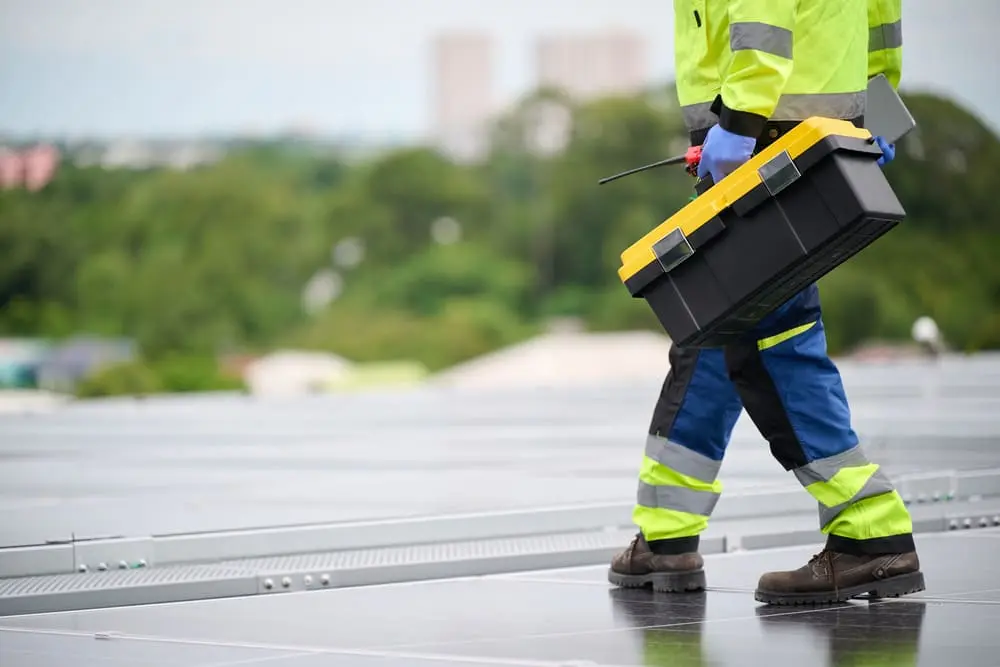
Water that stays on a flat roof after the rest of the surface has dried has one of a handful of causes: a blocked or undersized drain, a roof that doesn't slope the way it should, a low spot that has developed over time, or something on the roof discharging water. The roofing industry generally calls it ponding once it has sat for 48 hours, but the clock alone doesn't tell you why the water is there, whether the roof is at risk, or what to do about it. What an owner can usefully do is record where the water sits, when it appears, and what else has changed on the roof, then hand that record to someone who can inspect the drainage path and the assembly under it.
This guide explains the mechanisms that produce recurring standing water, what you can safely observe from a safe ground-level or indoor vantage point, and what a property-specific assessment should establish before anyone proposes a remedy.
In this article
What counts as ponding water?
The Asphalt Roofing Manufacturers Association’s ponding bulletin uses 48 hours as its definition of persistent standing water. Rain, snowmelt and equipment discharge can all be sources. That definition helps describe a drainage condition; it does not diagnose the roof or establish a universal time of failure.
The 48-hour figure is a definition. It doesn't mean water that drains in 40 hours is harmless or that water sitting for 50 hours after a heavy storm is a failure. Low-slope roofs hold water briefly while it moves toward a drain. The concern is water that keeps coming back to the same spot, or stays long enough for debris, growth, ice and weight to build up. How much standing water a given roof tolerates depends on the membrane, the assembly, the structure and the wording of its warranty, so a universal threshold doesn't settle anything for your building.
Why does water keep standing in the same place?
Recurring ponds usually trace back to one of four mechanisms, and sometimes to more than one at once.
Blocked or undersized drainage
Roof drains sit at low points, where leaves, sediment and loose debris also collect. A blocked strainer, obstructed scupper or frozen downspout can keep water near an outlet. GAF’s drain-maintenance guidance identifies debris removal as an essential part of keeping that path open.
Drainage can also be inadequate without being blocked. A roof that was re-covered, had equipment added, or had its parapets or scuppers altered may now send more water to fewer outlets than the original design assumed.
Slope and roof geometry
A low-slope roof still needs a drainage path. Older construction, additions and changes around equipment can leave areas without enough fall toward an outlet. Curbs and walls can interrupt the path. An evaluator should check the roof geometry and the requirements for the particular assembly, rather than apply one slope rule to every existing building.
Localized depressions
A roof that once drained properly can develop low spots. GAF’s discussion of roof water identifies installation irregularities and structural deflection as possible contributors. Changes in the support beneath the membrane also need investigation. Accumulating water adds load, so a large or growing depression warrants professional review.
Equipment discharge and other water sources
Some standing water never fell as rain. Air-conditioning condensate lines that discharge onto the membrane, cooling-tower overflow, leaking rooftop piping and even window-washing runoff can keep an area wet when the rest of the roof is dry. ARMA's bulletin specifically recommends connecting HVAC condensate lines to proper drains. A pond that shows up on dry days points away from rainfall and toward something on the roof, which makes it one of the more useful things an owner can notice.
What standing water does to a roof over time
Persistent ponding can add structural load, promote vegetation and debris buildup, and increase the consequences of a membrane opening. Freezing water can also affect the roof surface. The severity depends on the assembly and conditions, not just how long a puddle remains.
Standing water does not by itself prove a leak, and a stain elsewhere does not establish that the pond caused it. Warranty treatment also varies. The GAF System Pledge specimen includes a drainage and ponding exclusion. Read the actual guarantee for your roof before assuming a drainage-related condition is covered.
What to record before anyone goes up
Keep a short log. A roofer who arrives with it can target the inspection instead of guessing which of the four mechanisms is at work.
| What to record | Why it matters |
|---|---|
| Location of each pond, marked on a roof plan or aerial image | Water near a drain suggests obstruction; water behind equipment or along a wall suggests geometry; water mid-field suggests a depression |
| How long it stays after rain stops, and whether that has changed | Helps compare drainage under the recorded weather conditions; changes may warrant investigation |
| Whether it appears on dry days | Points to equipment discharge, a leaking pipe or a condensate line rather than rainfall |
| Season and weather: heavy storm, light rain, snowmelt, freeze-thaw | Separates capacity problems from blockage and from winter ice at scuppers |
| Recent rooftop work: new HVAC units, solar, antennas, trades on the roof | New equipment can interrupt flow lines or crush insulation along service paths |
| Prior repairs and their locations | Shows whether the same area has been patched before and whether patches sit in the pond |
| Any interior signs, with date and location | Interior evidence is a clue to timing, not proof that the pond is the entry point |
| Photographs, dated, taken from a safe vantage point | Lets the inspector compare conditions over time |
Use a safe ground-level or indoor vantage point. Do not climb onto a wet roof to complete this log. Roof access, fall protection and work near edges belong with trained people using the appropriate safeguards; OSHA’s walking-working surface rules describe the employer’s obligations.
What a drainage assessment should establish
The assessment should answer specific questions, separate what was observed from what was inferred, and cover at least the following:
- Drainage path. Whether drains, strainers, scuppers, gutters and overflow outlets are clear, intact and correctly sized for the roof area feeding them, and whether each drain bowl still sits at the low point or the surface has settled around it.
- Slope and low spots. Where water actually flows and where it stops. Observations after rain and appropriate measurements can reveal conditions that a dry-day visit misses.
- Condition beneath the pond. Whether the insulation under the standing water is dry and firm or crushed and wet. This may require moisture testing or a core sample rather than a visual check. Standing water over wet insulation is a different problem from standing water over a sound assembly.
- Structure. Whether deck deflection is a factor where the depression is large or growing, and whether that calls for a structural engineer rather than a roofer.
- Water source. What is discharging onto the roof if the pond doesn't follow rainfall, and whose equipment it is.
- Warranty position. What the roof's actual warranty says about drainage, and whether the proposed correction needs manufacturer notice or approval.
The remedy follows from those answers, and the remedies differ a lot: clearing and repairing drains, adding or relocating drains and scuppers, installing tapered insulation or crickets to restore slope, replacing crushed or wet insulation, rerouting a condensate line, or, where the deflection is structural, work that goes beyond the roof. A coating applied over a pond doesn't change why the water is there. The GAF liquid-applied manual calls for ponding areas to be addressed before coating.
Bring the log to a commercial roof drainage and repair assessment. Ask which observations explain the recurring water, what further investigation is needed, and what a proposed correction will address.
Related questions this guide doesn't answer
A few related questions are covered elsewhere:
- How often the roof should be inspected and how drain clearing fits into a budget belongs in the commercial roof maintenance planning guide.
- Whether a different membrane would tolerate your drainage conditions better is a system-selection question; the TPO, EPDM and modified bitumen comparison explains how drainage and detailing figure into that choice.
- Interior moisture that appears without a visible pond, or without rain, may not be a roof opening at all. That's a separate investigation.
Ponding water FAQs
Is 48 hours of standing water always a problem?
Is 48 hours of standing water always a problem?
No. The 48-hour figure is how associations and manufacturers define ponding; it isn't a line between safe and unsafe. What matters is whether the water returns to the same place, what sits beneath it, how much load it adds and what your warranty says about drainage.
Does standing water mean the roof is leaking?
Does standing water mean the roof is leaking?
No. It means water isn't leaving the roof as designed. Whether it's entering the building depends on the membrane, seams and flashings in and around the pond, which an inspection has to establish.
Can a coating fix ponding?
Can a coating fix ponding?
No. A coating changes the surface and leaves the slope and the drains as they were. Check the coating manufacturer’s drainage requirements; GAF’s manual calls for ponding areas to be corrected before application. Silicone products are formulated to tolerate standing water better than some alternatives, but that describes the coating's durability. It isn't a drainage repair.
Should I have the drains cleared and see if the problem goes away?
Should I have the drains cleared and see if the problem goes away?
Clearing debris is reasonable routine maintenance, and it's often the first thing to rule out. If the pond returns after clearing, drainage capacity, geometry and other contributors still need investigation.
Sources
- ARMA: Effects of Ponding Water on Low Slope Roof Systems (revised August 2019). Definition of ponding, listed consequences, and recommendations on slope, tapered insulation, crickets and condensate connections.
- GAF: Mitigating Water on Roofs (July 2025). Surface irregularities from installation or deck deflection, obstructions, drain maintenance and vegetation damage.
- GAF: The Importance of Commercial Drain Maintenance (August 2024). Debris at low points and the weight of standing water.
- GAF Liquid-Applied Roofing Manual, Version 2.2. Product-system drainage requirements before coating.