
Snow Loads on Commercial Roofs: What Owners Should Know
Snow depth cannot establish a roof's capacity. Learn which building records, warning signs and professional responsibilities matter before winter.
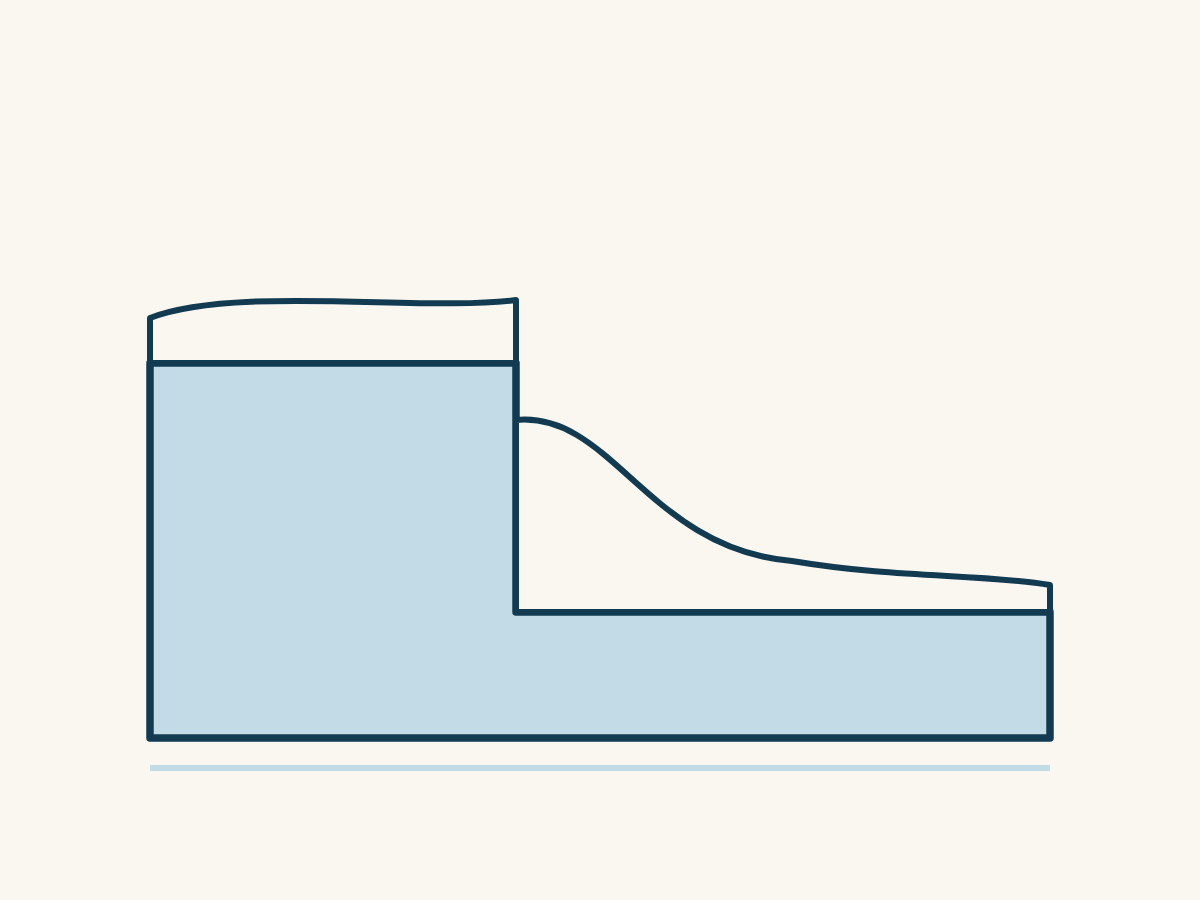
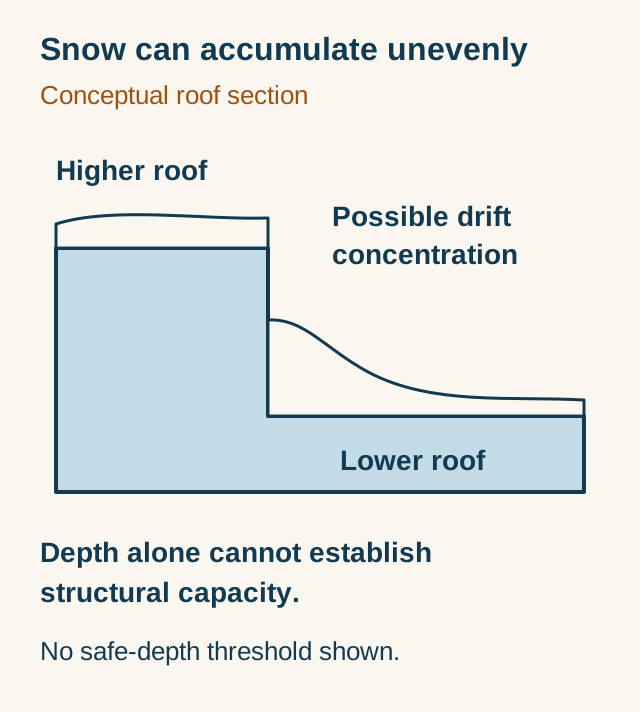
Conceptual snow accumulation, not an assessment of any building or a safe-depth guide.
Snow load is the weight snow and related accumulation place on a roof. Snow depth alone cannot establish whether a commercial roof is safe: the weight, its distribution and the building's actual structural capacity all matter.
For an owner or property manager, preparation starts with locating the building records and identifying who can evaluate capacity. A general depth-to-weight calculator cannot make that assessment for the installed roof.
In this article
What if the building shows signs of distress?
FEMA's Snow Load Safety Guide, sections 4.2 and 4.3, identifies warning signs such as new sagging or falling ceiling materials, unusual cracking or popping sounds, bowed or sagging structural members, doors that suddenly bind, and new cracks in walls or masonry.
If signs of overstress appear during a snow event, FEMA advises prompt evacuation and a detailed structural inspection by a qualified design professional. Contact the local building authority and follow emergency instructions where there is immediate danger. Do not wait for a roofing estimate or enter the roof to investigate. An absence of visible warning signs does not establish that the building is safe.
Why is snow depth an unreliable capacity check?
The same depth can represent different weights because snow contains different amounts of water. Rain and ice can add weight, while drifting and sliding can concentrate accumulation in particular locations.
An apparently even roof seen from the ground may have different conditions near a higher wall, roof step or obstruction. The building needs to be considered as a structure with its own geometry and loading history, rather than compared with a generic inches-of-snow rule. FEMA's guide explains these accumulation patterns and the additional loading associated with rain on snow.
That is also why a measurement from an open area on the ground does not directly establish what the roof carries. Ground snow information and a roof's design loading are different parts of the assessment.
How are design load and current conditions different?
A design load is part of the structural design basis. Current conditions concern the loads on the building and the condition of the structure now. A qualified structural professional needs to interpret the relationship between them.
Original drawings are useful, but the building may have changed since they were prepared. Added rooftop equipment, solar installations, alterations and additional roofing materials belong in the record. The professional reviewing capacity needs to know about those changes rather than assume the original drawing describes everything currently installed.
Finding a load number in an old plan is therefore a starting point for review, not an owner-issued clearance to continue operating. Equally, a building's age alone does not establish that it is deficient.
Which records should an owner locate before winter?
Prepare a building-specific file before a storm makes access and decision-making more difficult. The worksheet below is for gathering records, not calculating capacity.
| Record or decision | What to gather or clarify |
|---|---|
| Structural design | Available drawings, design reports and identified code edition |
| Later work | Alterations, roof overlays, equipment or solar added since the original design |
| Previous concerns | Earlier structural evaluations, distress reports or storm-related repairs |
| Roof geometry | Existing plans showing higher and lower roof areas, parapets and equipment |
| Responsible professional | Who can interpret the records and assess structural concerns |
| Building response plan | Who makes occupancy decisions, contacts authorities and communicates with occupants |
| Separate work responsibilities | Who evaluates roof condition and who would plan any specialist snow-removal work |
Mark missing or uncertain records clearly. Do not replace an unavailable structural report with an assumption based on the membrane type, a nearby building or how the roof handled an earlier storm.
Who evaluates capacity, roof condition and snow removal?
These are different jobs. Structural capacity belongs with a qualified design professional. Roofing condition work concerns the installed covering and related details. Any snow-removal operation also needs an appropriate work and safety plan.
The OSHA rooftop-snow hazard alert describes serious fall and collapse risks during removal. Sending someone onto a roof with tools and equipment also adds loads to the work area. A removal decision needs to account for the people doing the work as well as the building.
An owner should not turn a general roofing article into a removal procedure. Identify the relevant professionals and responsibilities beforehand; do not improvise roof access or a clearing pattern from online advice.
Does drainage maintenance settle the snow-load question?
No. Roof drainage and surface condition matter, but clearing drains or repairing a membrane does not establish structural capacity. Keep the maintenance record and the structural question connected without treating them as interchangeable.
The commercial roof maintenance guide covers routine care, records and budgeting. Recurrent standing water has its own ponding-water investigation questions. Those records can inform the professionals reviewing the building, but neither guide provides a snow-load clearance.
For ordinary roof-condition work and winter project planning, talk with Sundra about commercial roofing. Bring available maintenance records and existing warranty documents so the discussion can focus on the installed roof and proposed work. Structural distress requires the protective actions and professional assessment described above, rather than a routine service enquiry.
Commercial roof snow-load FAQs
Can a contractor tell capacity from a roof photograph?
Can a contractor tell capacity from a roof photograph?
A photograph can document a condition, but it cannot establish the building's structural capacity. That requires the appropriate records and professional assessment of the actual structure and loads.
Is there a safe snow depth for every flat roof?
Is there a safe snow depth for every flat roof?
No universal depth establishes safety. Snow weight, uneven accumulation, building condition and the design basis differ. This guide intentionally supplies no safe-depth threshold or capacity calculator.
Should the roof be cleared whenever it snows?
Should the roof be cleared whenever it snows?
A general rule does not account for the building or the hazards of removal. Have the appropriate professionals establish the response plan. This article does not provide instructions for accessing or clearing a roof.
Sources
- FEMA P-957, Snow Load Safety Guide, January 2013: accumulation patterns, building preparation, warning signs and protective action, especially sections 2, 4.2 and 4.3. This is safety guidance, not a design manual or a current local code specification.
- OSHA, Falls and Other Hazards to Workers Removing Snow from Rooftops and Other Elevated Surfaces: worker hazards and the need to consider loads and work planning. Professional removal procedures are not reproduced here.
Related reading
- Commercial Roof Maintenance Plans: What Property Managers Should Budget For
- Ponding Water on a Flat Roof: Causes and What to Check