
Commercial Solar Battery Storage: Backup Power vs Everyday Operation
Compare commercial solar battery storage for backup and daily energy shifting. Learn what loads, usage records and proposal details an owner should gather.
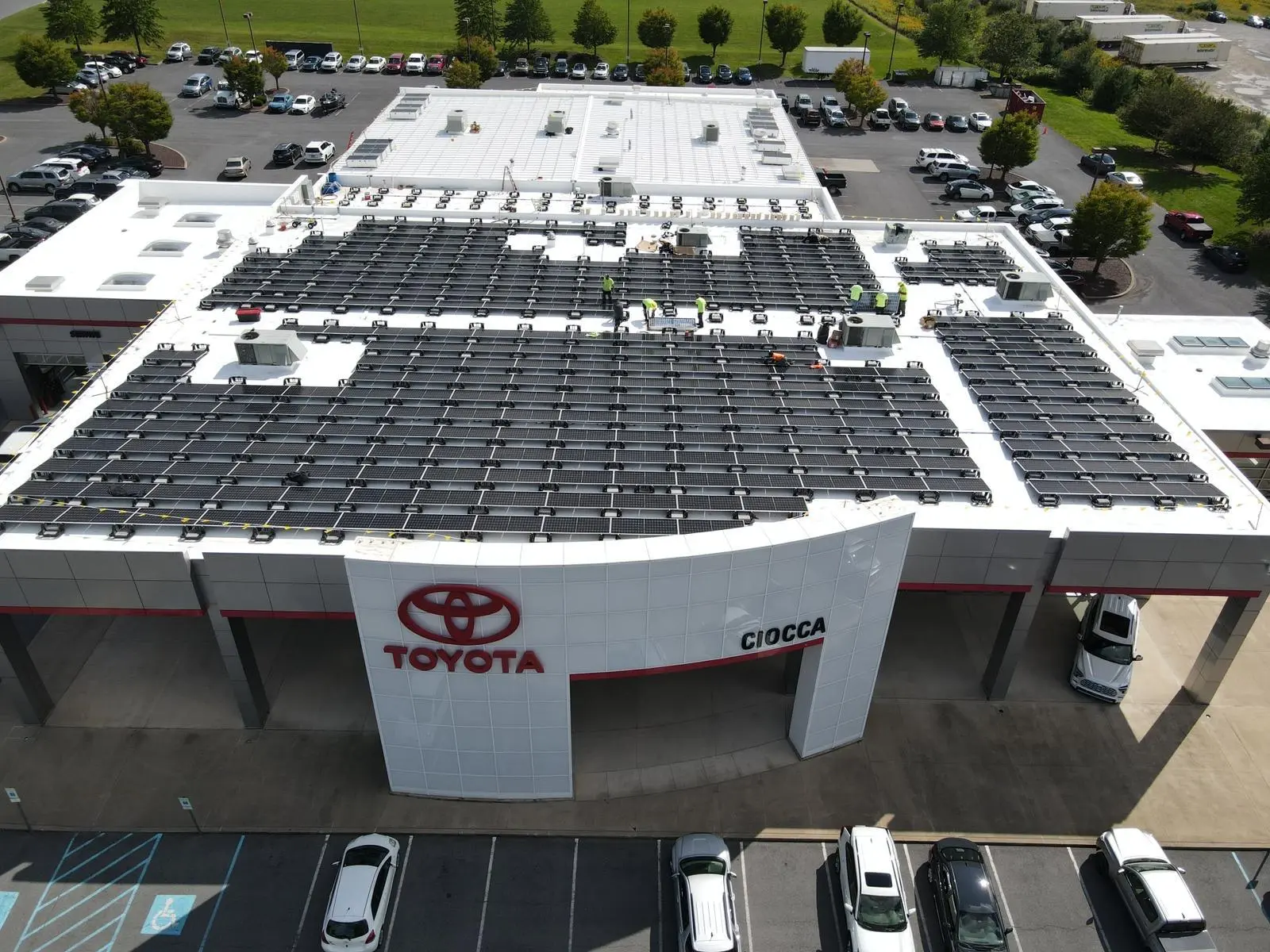
Commercial solar battery storage can support selected loads during an outage or move energy from the time it is generated to a later time. One system may serve both purposes, but backup capability and everyday operation need to be specified separately. Adding a battery does not automatically make a solar installation an outage backup system.
For the owner paying the electric bill, the first decision is what the equipment needs to do. That applies to any building in Pennsylvania, New Jersey or Delaware, from a retail unit to a warehouse. Roof area alone cannot establish storage size, backup duration or a financial outcome.
In this article
Will solar panels keep a building running during an outage?
Standard grid-connected solar does not provide backup simply because panels are producing electricity. Such systems ordinarily disconnect when utility power fails. Operating independently requires a design that safely separates the backed-up system from the grid.
The Department of Energy's resilience guidance explains the roles of a suitable inverter and storage in maintaining power when the grid is unavailable. The design must also establish which building loads are supplied and how the equipment changes between grid-connected and independent operation.
Ask the designer to show the backed-up circuits, the isolation and transfer arrangement, and the controls. The proposal should explain whether a transfer interruption occurs and whether sensitive equipment needs separate protection. A solar layout drawing is not enough to answer those questions.
What determines how much backup a battery provides?
Backup depends on the loads being served, the energy available when an outage begins and the opportunity to recharge. A battery's advertised capacity cannot establish runtime without those assumptions.
A National Renewable Energy Laboratory study of commercial solar and storage identifies starting charge, critical loads and available solar energy as factors in outage performance. Its modeled buildings are examples, not sizing guidance for a particular property.
Begin with a list of equipment that must operate. Separate equipment needed throughout an outage from loads that can be stopped, delayed or used intermittently. Have the designer confirm both operating and starting requirements from the equipment documentation. Include any existing generator in that discussion so the proposed controls and responsibilities are clear.
Request runtime estimates under stated conditions, including an outage beginning when the battery is partly discharged and solar production is limited. Ask what happens when stored energy runs out. Those scenarios are more useful than a single backup-duration claim without assumptions.
What does the battery do during everyday operation?
During normal operation, storage can charge when energy is available and discharge at a later time. The DOE storage guide explains this timing function and the distinction between generating electricity and storing it for later use.
The operating plan should state when the battery charges, when it discharges and what determines those choices. That may involve solar production, building demand, the utility tariff and limits set by the equipment or utility agreement. A building's actual usage pattern matters more than an assumed daily profile.
Any projected bill effect belongs in the financial analysis. The commercial solar ROI guide explains why on-site consumption, exported energy and demand charges need separate treatment. Storage should have its own assumptions and costs in that analysis; its presence alone does not establish savings.
Can one system support both objectives?
Yes, if the design and operating controls address both. Using stored energy during ordinary operation changes how much may be available when an outage starts. Ask whether a reserve is held for backup, how it is set and what happens when conditions change.
The NREL analysis found that including resilience in the objective could change the modeled system design. It does not establish which combination is best for your building. Compare the proposed daily operating strategy with the backup conditions you actually need.
| Objective | Main question | Evidence to request |
|---|---|---|
| Outage backup | Which loads continue operating, and under what conditions? | Load list, electrical configuration and runtime scenarios |
| Everyday energy shifting | When does storage charge and discharge? | Usage data, tariff assumptions and control strategy |
| Both | What is reserved for outages while the system operates normally? | Reserve settings and performance scenarios for both objectives |
| Another purpose | Is the proposal serving a separate utility or operating requirement? | Named objective, applicable agreement and design assumptions |
What information should an owner gather?
Provide records that show how the building operates, including changes planned after installation. If a record is unavailable, identify the gap so the designer can explain how it affects the proposal.
| Information | Why it helps |
|---|---|
| Recent electricity bills and available interval usage data | Shows the tariff and when electricity is used |
| Operating hours and seasonal patterns | Helps distinguish routine loads from occasional peaks |
| Planned tenant, equipment or occupancy changes | Prevents sizing solely around past operations |
| Electrical service and panel information | Supports evaluation of connection options and needed work |
| Equipment that must run during outages | Establishes the backup task |
| Required operating duration and acceptable interruptions | Defines the performance to evaluate |
| Existing generator and transfer equipment records | Allows the proposed system to account for existing equipment |
| Available installation space and access constraints | Supports placement, maintenance and permitting review |
Keep assumptions visible. If a proposal uses a typical load profile because measured data is missing, ask how that affects confidence in its results.
What installation and approval questions belong in the proposal?
The proposal should identify the applicable electrical and fire requirements, equipment listings, permits and utility approvals. Requirements depend on the equipment, configuration and jurisdiction, so a general article cannot specify them for an address.
NFPA's guidance on electrical codes for storage and solar identifies NFPA 855 as a stationary energy storage installation standard. Ask the project team which adopted codes and standards apply locally and how they affect equipment placement and access.
The commercial solar installation guide explains the broader project approval process. A storage proposal should identify its additional scope, responsible parties and dependencies. It should also cover monitoring, maintenance, equipment warranty and end-of-life responsibilities.
Where does storage fit in the solar decision?
If you own the building and pay its electric bill, start with Sundra's commercial solar services for properties across Pennsylvania, New Jersey and Delaware. Bring the electricity-use question and any backup requirement into the same conversation, so the solar decision reflects how the building operates.
Discuss your commercial solar project with Sundra. Have recent electricity bills available and describe which equipment you would want to keep running during an outage. Ask whether storage can be included in the proposed project and who would be responsible for its design, installation and support. Storage availability and scope need confirmation; this guide is not an offer of a standalone battery service.
Keep the backup objective, daily operating plan, installation cost and projected bill effects separate when comparing proposals. Each should be supported by building-specific information, with missing data and assumptions explained.
Commercial solar battery storage FAQs
Will panels alone keep the lights on during a blackout?
Will panels alone keep the lights on during a blackout?
Standard grid-connected panels do not provide backup on their own. Outage operation requires a suitable electrical configuration, isolation from the utility and equipment designed for that mode.
Can storage serve only part of the building?
Can storage serve only part of the building?
A backup design can identify selected loads. The proposal should show exactly which equipment is served and which equipment will remain off.
How big a battery does a commercial building need?
How big a battery does a commercial building need?
There is no general size. The answer depends on the intended job, the loads and usage pattern, the required duration and the operating assumptions.
Does everyday cycling affect backup availability?
Does everyday cycling affect backup availability?
It can. Energy used during ordinary operation may be unavailable when an outage starts. Ask how the system manages a backup reserve and how that affects its daily operation.
Does storage need separate approval review?
Does storage need separate approval review?
The project team should check permits, electrical and fire requirements, and utility approval for the proposed storage configuration. Do not assume approval of solar alone covers a battery addition.
Sources
- U.S. Department of Energy: Solar and Resilience Basics supports the distinction between standard grid-connected solar and systems configured for outage operation.
- U.S. Department of Energy: Solar Integration, Solar Energy and Storage Basics supports storage's role in moving energy across time.
- NREL: Valuing the Resilience Provided by Solar and Battery Energy Storage Systems, January 2018 supports the outage-performance factors and distinction between resilience and normal-operation objectives. Historical model costs and outcomes are not used as project estimates here.
- NFPA: The Importance of Electrical Codes for Safer ESS and PV Installations, February 2024 identifies relevant electrical and stationary storage installation considerations. Local adoption and the specific design determine applicable requirements.