
How Commercial Solar Installation Actually Works: Timeline and Process
Understand commercial solar installation stages, required documents, approval dependencies, roof coordination, and final system handover.
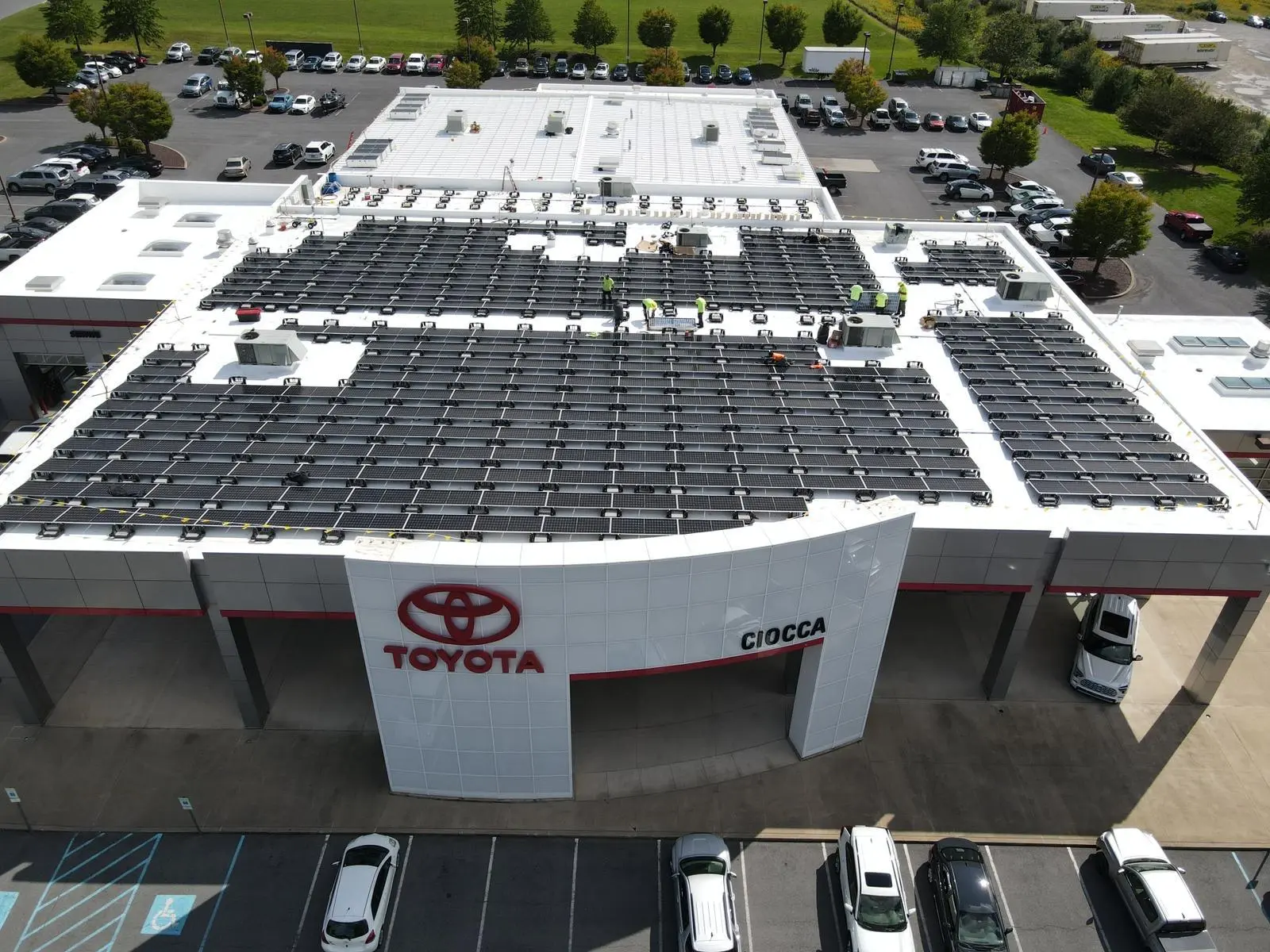
A commercial solar installation moves through building assessment, engineering, permitting, equipment procurement, construction and utility approval. The schedule depends on the property and the organizations reviewing the project. A proposed completion date is useful only when it identifies those dependencies.
This guide explains what happens at each stage, which documents a building owner should collect, and how to distinguish construction completion from a system being ready to operate. Sundra plans and installs commercial solar across Pennsylvania, New Jersey and Delaware, with roof condition, electricity use and building operations considered together.
In this article
What should be checked before a solar system is designed?
Start with the building and its electricity use. Available roof area alone does not establish how much solar a property can support or whether the resulting electricity will be valuable to the occupant.
Collect a full year of electricity bills, available interval-use data, roof records, structural drawings and information about planned changes in occupancy or equipment. Identify who owns the building, who pays each electric meter and who can authorize changes. A landlord and tenant may have different rights and financial interests.
The initial review should cover:
- Roof condition, drainage, existing warranties and access for maintenance.
- Structural capacity and the proposed mounting method.
- Shading, rooftop equipment and space needed for access.
- Electrical service, proposed connection point and utility requirements.
- Electricity consumption during the hours the array would produce power.
If roofing work is likely during the array's operating life, compare doing that work first with the future cost of removing and reinstalling solar panels. There is no single remaining-roof-life cutoff that answers this for every building.
What happens during engineering and financial modeling?
Engineering turns the initial concept into a documented design. The review considers structural loads, electrical connections, equipment selection and requirements applicable to the site. The proposed layout should leave access to roof drains, mechanical equipment and areas that may need future repairs.
Production modeling estimates generation rather than guaranteeing it. Ask which weather data, shading assumptions and equipment losses were used. Keep generation separate from savings: the value of a kilowatt-hour depends on whether it replaces electricity purchased on-site or is exported under the applicable tariff.
The solar ROI calculation should use the same design and production assumptions as the engineering package. If a later design revision reduces the array size, the financial model needs to change too.
Which approvals belong in the project schedule?
The authority having jurisdiction and the electric utility have different review responsibilities. Identify both early, along with any additional approvals relevant to the property.
| Workstream | Questions to resolve |
|---|---|
| Building and electrical review | Which permits and drawings are required for this property? |
| Property approvals | Are landlord, lender, board or other consents needed? |
| Utility interconnection | Which application, studies, equipment or upgrades apply? |
| Incentive registration | Is approval or registration required before particular project milestones? |
| Roof and equipment warranties | What documentation or installation conditions must be preserved? |
A permit application is not a permit approval. An interconnection application is not permission to energize the array. The schedule should show the responsible party, required submission and outstanding decision for each.
State incentive programs also differ. New Jersey's ADI program uses SREC-II certificates; Pennsylvania's renewable energy credits operate within its Alternative Energy Portfolio Standards framework. Check the relevant program before assuming one state's registration process applies elsewhere.
How should roof work and equipment procurement be coordinated?
Resolve roof repairs, replacement needs and mounting compatibility before finalizing construction sequencing. The roofing-and-solar coordination page describes the combined service scope; the planning question is which work must precede which, and who documents acceptance of the completed roof.
Procurement should follow the approved equipment specifications and applicable contract conditions. A substitute panel or inverter can affect the layout, electrical design, warranty or incentive documentation. Record substitutions rather than assuming that equivalent wattage makes products interchangeable.
For projects claiming federal incentives, retain the equipment and sourcing records requested by the tax adviser. Supply-chain eligibility is a separate issue from whether equipment is technically suitable. The Section 48E and depreciation guide explains that distinction.
What should building occupants expect during construction?
Prepare a site-specific access and disruption plan before work starts. It should address deliveries, lifting operations, protected work areas, roof access, noise and any electrical shutdowns. Tenant notification and scheduling are part of that plan.
Do not assume rooftop work has no effect on building operations. Electrical connections, access restrictions or unexpected conditions can require coordination with occupants. The project team should identify those needs in writing rather than promise uninterrupted operations.
Keep a record of inspected work, approved changes and equipment serial numbers as installation progresses. Those records are easier to assemble during construction than after a team has left the site.
What happens after the equipment is installed?
Inspection, utility authorization and commissioning are distinct milestones. Confirm which checks and approvals apply to the specific connection before operating the system.
At handover, request the final drawings, equipment documentation, warranty information, inspection and utility records, monitoring access, shutdown instructions and maintenance responsibilities. Identify who investigates a production alert and how the owner can obtain the system's data.
A nonprofit claiming elective pay also has a separate post-installation registration and tax-filing process. The direct-pay guide covers that sequence; finishing construction does not complete the tax election.
How can an owner evaluate a proposed timeline?
Ask for a dependency-based schedule, not only a finish date. It should distinguish work controlled by the installer from decisions controlled by a utility, permitting authority or property stakeholder.
Useful questions include what remains unresolved, which activities can overlap, what triggers procurement, and how a design change would affect approvals. Keep project scheduling separate from tax eligibility dates, which require current guidance and project-specific advice.
When you start a solar project discussion with Sundra, identify who owns the building and pays the electric bill, any planned roof work, and dates when access or electrical interruptions would be difficult. Have utility bills and available roof records ready. Those details help frame a proposed sequence around the property instead of an assumed installation deadline.
Commercial Solar Installation FAQs
Does the roof have to be replaced before solar?
Does the roof have to be replaced before solar?
Not automatically. The decision depends on condition, compatibility, anticipated roofing work and the cost of future array removal. Document the assessment before choosing the installation sequence.
Can a system operate as soon as panels are installed?
Can a system operate as soon as panels are installed?
Panel installation alone does not establish that a grid-connected system is ready to operate. Confirm the required inspections, utility authorization and commissioning steps.
What should be included in the owner's project file?
What should be included in the owner's project file?
Keep contracts, approved drawings, changes, equipment records, roof documentation, inspections, utility approvals and monitoring instructions together. Retain any additional records needed to support an incentive claim.
Sources
- New Jersey Clean Energy: ADI program FAQs, NJ SREC-II program terminology and administration.
- Pennsylvania DEP: Solar energy resources, the state's AEPS and utility-specific interconnection context.
- IRS Notice 2026-15, federal prohibited-foreign-entity material-assistance guidance.
Related reading
- Is Commercial Solar Still Worth It in 2026? ROI Breakdown for PA and NJ Businesses
- How Long Does a Commercial Roof Last? Lifespan by System