
How Nonprofits Claim Direct Pay for Solar: A Step-by-Step Guide to the IRS Process
Solar for nonprofits without a tax bill: how direct pay turns the federal credit into cash for churches, schools, and municipal buildings.
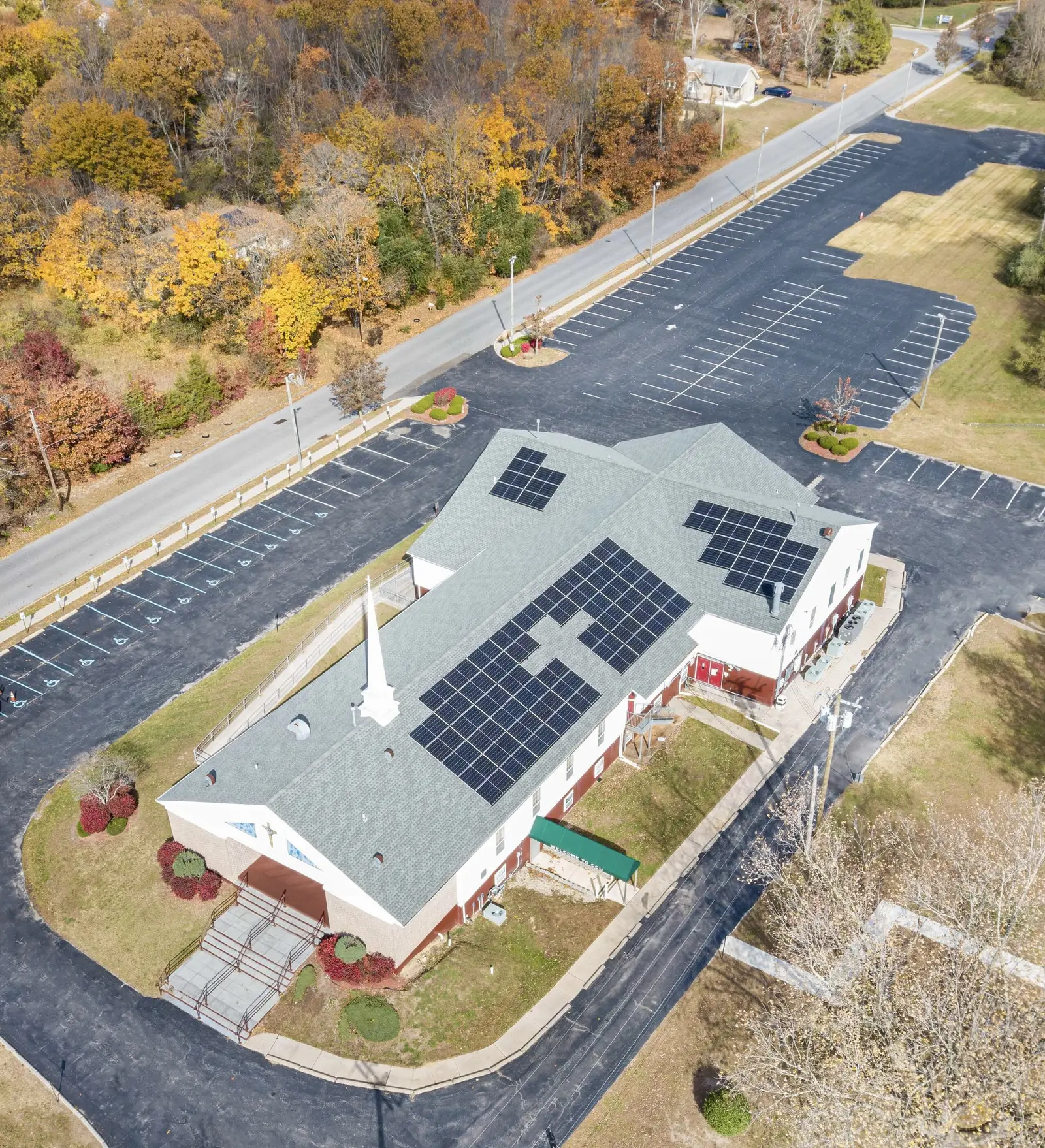
Elective pay, often called direct pay, allows eligible tax-exempt and governmental entities to receive the value of certain clean-energy credits through the tax-return process. It does not eliminate the need to qualify for the underlying credit, document the project or make the required election.
For a nonprofit evaluating solar, the practical task is to coordinate project ownership, eligibility, registration and filing. This guide explains those steps without assuming a refund amount or payment date. It is educational information, not legal or tax advice.
In this article
Who can use elective pay for solar?
Eligibility depends on the legal entity and the underlying credit. Applicable entities include qualifying tax-exempt organizations and governmental entities, with other categories described in IRS guidance. A familiar label such as school, hospital or community organization is not by itself an eligibility determination.
Identify the entity that will own the solar property and the entity making the election. If a third party owns the array under a power-purchase agreement, the nonprofit should not assume it can claim a credit on that party's property.
Before contracting, ask a qualified adviser to confirm the organization's status, ownership structure and applicable tax year. Sundra plans and installs commercial solar for businesses and organizations across PA, NJ and DE. Our installation scope is separate from your adviser's determination of eligibility for an IRS payment.
How is the potential payment determined?
Elective pay uses the amount of an eligible underlying credit. It is not an additional credit stacked on top of that amount.
Section 48E has a 6% base rate and a conditional 30% alternative rate. Qualifying facilities below 1 megawatt AC have a wage-and-apprenticeship exception for the higher rate; other eligibility rules still apply. Additional credit amounts require their own substantiation.
For arithmetic only, a project with $200,000 of eligible basis and a confirmed 30% applicable rate would calculate a $60,000 credit before any relevant adjustments. Those assumptions are not a quote, an eligibility finding or a promise of a $60,000 payment.
Keep the distinctions clear:
| Question | Why it matters |
|---|---|
| Does the entity qualify? | Organizational status and ownership affect who can elect payment |
| Does the facility qualify? | Project characteristics and applicable dates affect the underlying credit |
| Which rate applies? | Higher rates and additions have separate conditions |
| Are reductions or adjustments required? | Funding, domestic-content and other rules can affect the amount |
| Has a valid election been made? | Registration alone does not request payment |
Which compliance issues need attention before installation?
Ask the adviser to review the project's dates, sourcing and funding arrangements before treating an incentive as committed funding.
Domestic-content requirements can affect elective payment independently of a domestic-content bonus. Exceptions and transition procedures exist, so a blanket statement that every nonprofit receives the same percentage is unreliable.
Prohibited-foreign-entity material-assistance requirements are a different test. IRS Notice 2026-15 addresses eligible-facility restrictions for construction beginning after December 31, 2025. Do not assume that being below 1 megawatt exempts the project from those rules.
Restricted grants and forgivable loans also deserve review alongside the credit calculation. Give the adviser the award documents and funding restrictions rather than assuming all grants can be added to the full credit without adjustment.
The Section 48E guide explains the credit framework. A nonprofit should not adopt its taxable-business depreciation example as its own financial model.
What is the sequence for claiming elective pay?
The sequence connects a completed qualifying project to registration and a tax-return election. Assign responsibility for the records and filing before work begins.
1. Establish eligibility and retain project records
Document entity status, ownership, eligible costs and relevant project milestones. Keep contracts, invoices, equipment and sourcing records, approvals and the evidence supporting the placed-in-service date.
The solar installation process includes several milestones. Construction completion, utility authorization and tax treatment should be recorded accurately rather than treated as identical events.
2. Complete IRS pre-filing registration
Use the IRS's current pre-filing instructions to register the applicable property before filing the election. Keep access and authorization arrangements under the organization's control, and allow time to answer requests for additional information.
A registration number is a prerequisite to the election, not IRS approval of the amount claimed. Avoid relying on an old screenshot or a fixed set of portal button labels.
3. File the applicable return and credit forms
The required return depends on the entity. Many tax-exempt organizations use Form 990-T, including some that otherwise have no annual income-tax-return requirement. Confirm the return, credit forms, registration information and deadline with the preparer.
IRS guidance describes the source credit form, Form 3800 and required attachments as part of the election. Use the instructions for the actual filing year rather than reusing a prior year's line numbers.
4. Retain the filing and track the outcome
Keep the submitted return, registration details and supporting records together. Registration, filing, processing and any refund are separate stages. Budgeting should not assume that a payment arrives when installation is finished.
How should a nonprofit budget for the gap before payment?
Separate the construction budget from the eventual tax-return outcome. Identify when invoices are due, which funds can pay them and how the organization would manage a smaller or later benefit than expected.
If borrowing is being considered, compare actual terms and any restrictions on use of proceeds. The commercial financing page is a service reference, not confirmation that a specific nonprofit is approved for financing.
Electricity savings also depend on the building and tariff. Use the methodology in the solar ROI guide, but replace taxable-business assumptions with the organization's own cash flows.
What building issues should be resolved before committing?
Review roof condition, structural suitability, electrical connection and how the premises are occupied. A grant or tax incentive does not resolve an unsuitable installation site.
Where roof work is needed, compare coordinating roofing with solar against installing an array and paying for later removal. Record who is responsible for roof warranties, maintenance access and equipment documentation.
To discuss your organization's solar project with Sundra, identify the property, the entity that owns it and who pays the electricity bill. Mention board or procurement requirements and known roof work. Have usage records and the organization's funding questions ready so the proposed installation can be considered alongside the financial and tax review. Sundra's proposal does not replace that review or establish a payment amount.
Nonprofit Solar Direct Pay FAQs
Is direct pay a grant?
Is direct pay a grant?
No. It is a tax election that makes eligible credits effectively refundable. The entity and property still need to meet the relevant requirements.
Does receiving a registration number guarantee payment?
Does receiving a registration number guarantee payment?
No. Registration does not establish substantive credit eligibility. A valid election and supporting tax return are still required.
Can the organization use a contractor's tax estimate for board approval?
Can the organization use a contractor's tax estimate for board approval?
Treat it as an assumption to verify. Board materials should distinguish project cost, modeled electricity benefits, confirmed funding and an incentive amount awaiting professional review.
Sources
- IRS: Elective pay and transferability, the payment mechanism, registration and domestic-content exceptions.
- IRS: Elective-pay FAQs, entity eligibility, returns and election requirements.
- IRS final clean-electricity regulations, Section 48E rate conditions.
- IRS Notice 2026-15, material-assistance restrictions distinct from domestic-content bonuses.
Related reading
- MACRS Depreciation + Section 48E: How Businesses Save on Commercial Solar in 2026
- How Commercial Solar Installation Actually Works: Timeline and Process